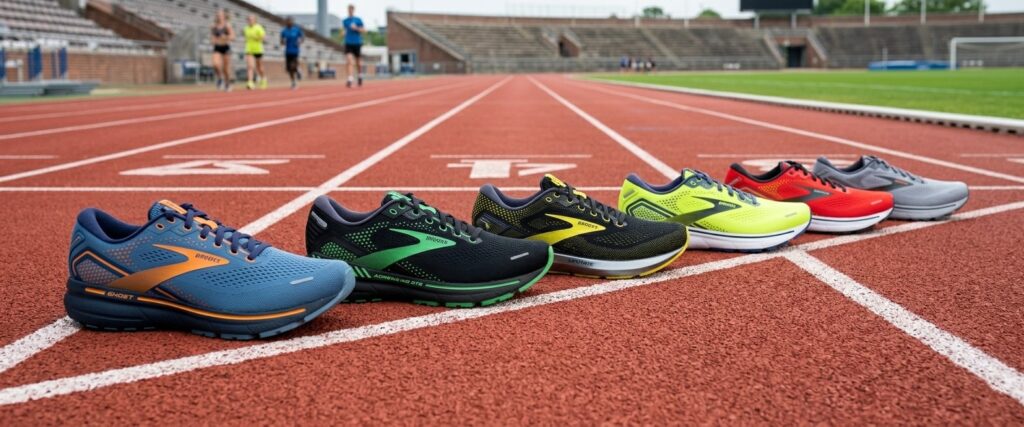
Finding the best neutral running shoes shouldn’t feel like a marathon before you’ve even laced up. If you have a normal arch and your feet don’t roll excessively inward (overpronation), you need a shoe that stays out of your way and lets your foot move naturally.
However, “neutral” doesn’t mean “basic.” Based on our thorough research and users’ feedback, the right pair can be the difference between hitting a personal best and being sidelined by plantar fasciitis or knee aches.
Quick Take:
- The Perfect Match: Runners with high to medium arches, those who supinate (roll outward), and anyone looking for a “natural” feel without corrective foam blocks.
- Not Suitable For: Runners with severe overpronation or very flat feet who require “stability” or “motion control” shoes to prevent injury.
Top Recommendations at a Glance
| Shoe Model | Best For | Cushion Level | Weight (Men’s 9) |
| Brooks Ghost 15 | Daily Training / Beginners | Balanced | 10.1 oz |
| Brooks Glycerin 20 | Long Distance / Recovery | Plush/High | 10.1 oz |
| Saucony Ride 17 | Versatility / Tempo | Responsive | 9.9 oz |
1. Brooks Ghost 15: The Gold Standard for Beginners
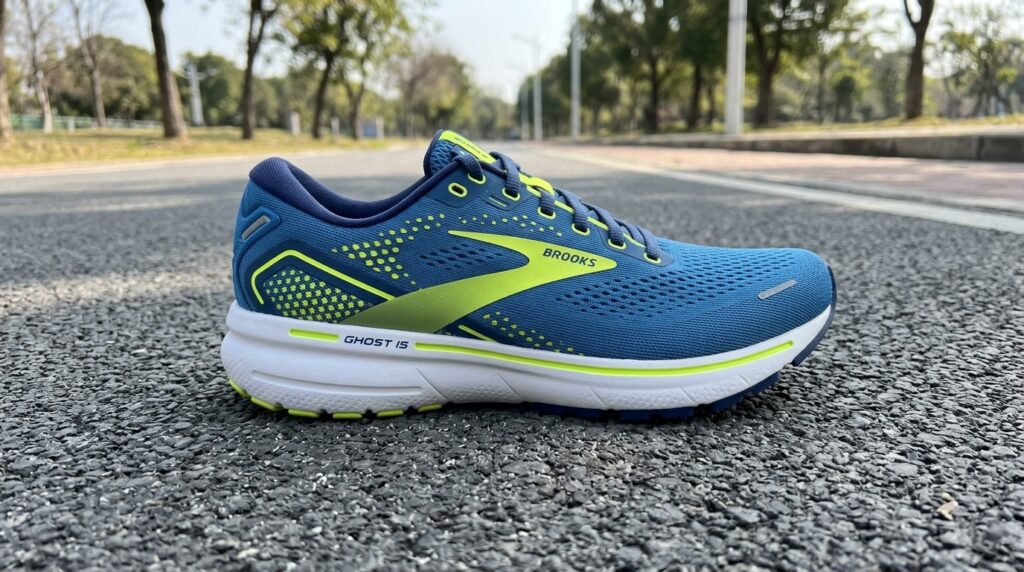
The Brooks Ghost 15 neutral running shoe is arguably the most “reliable” shoe on the market. It doesn’t try to be flashy; it tries to be consistent.
Pros & Cons
Pros:
- DNA LOFT v2 cushioning: Provides a soft but structured landing.
- High Drop (12mm): Excellent for heel strikers and those with Achilles issues.
- Durability: The outsole is built like a tank.
Cons:
- Firmness: Some might find it a bit “stiff” compared to modern “super-foams.”
- Weight: It’s a bit heavier than dedicated racing shoes.
Performance Analysis
In real-world use, the Ghost 15 excels as one of the best neutral running shoes for beginners. It provides a secure fit through the midfoot and a crash pad that handles heavy heel strikes effortlessly. If you are just starting and don’t want to overthink your gear, this is the safe bet.
2. Brooks Glycerin 20: The Long-Distance King
If the Ghost is the reliable sedan, the Brooks Glycerin 20 neutral running shoe is the luxury SUV. It utilizes nitrogen-infused DNA LOFT v3 foam, which is lighter and softer than previous iterations.
Pros & Cons
Pros:
- Max Cushioning: The best cushioned neutral running shoes for joint protection.
- Breathable Upper: The engineered mesh keeps feet cool during 10+ mile runs.
- Smooth Transitions: The widened platform makes for a very stable, neutral ride.
Cons:
- Price: It sits at a higher price point than the Ghost.
- Mishap Feel: Can feel a bit “mushy” if you’re trying to run high-speed intervals.
Performance Analysis
This is the premier choice for neutral running shoes for long distances. Compared with similar products, the Glycerin 20 holds its cushion integrity even after 300+ miles. It’s specifically designed for those who want to finish a half-marathon without their knees feeling like they’ve gone through a meat grinder.
3. Best Neutral Road Running Shoes for Women & Men
When looking for neutral running shoes for men or neutral running shoes for ladies, the fit often comes down to volume.
- For Men: We recommend the Saucony Ride 17. It offers a wider toe box, which is essential for the natural swelling that occurs during neutral road running.
- For Ladies: The neutral running shoes ladies often prefer are the Asics Novablast series. They offer a “trampoline” effect that assists smaller frames in maintaining energy return without needing a heavy stride.
Key Features Breakdown: What Makes a Shoe “Neutral”?
To be considered among the best neutral running shoes, a product must hit three marks:
- Absence of Medial Posts: There should be no hard plastic or “dual-density” foam on the inner arch side.
- Flexibility: The shoe should flex at the forefoot to allow a natural toe-off.
- Cushioning Distribution: Cushion neutral running shoes distribute foam evenly across the sole rather than forcing the foot into a specific alignment.
Comparison: Neutral vs. Stability
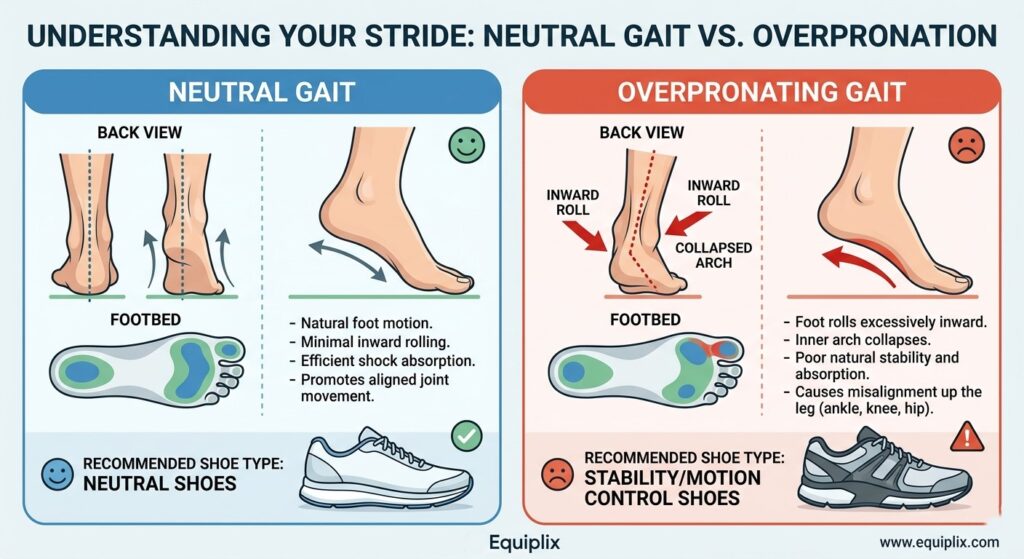
Many runners ask, “How do neutral shoes running differ from stability shoes?”
- Neutral Shoes: Focus on shock absorption. They are “passive” and let the foot do the work.
- Stability Shoes: Focus on “correction.” They have “guards” to stop the foot from rolling inward.
Choose Neutral if your old running shoes show wear evenly in the center of the forefoot and the outside of the heel.
Frequently Asked Questions (FAQs)
They are shoes without corrective support features, designed for runners with high/medium arches who have a “neutral” gait or supinate (roll outward).
Generally, no. Flat feet often overpronate, meaning they need “Stability” shoes. However, some runners with flat feet prefer neutral shoes when using custom orthotics.
Yes, neutral running shoes are ideal for beginners if you have a natural gait. It’s better to start neutral and only move to stability if you experience pain or notice excessive inward rolling.
Yes. Best cushioned neutral running shoes absorb the impact forces that would otherwise travel into your ankles, knees, and hips.
Look at the bottom of your current shoes. If the wear is even, you need neutral. If the inner edge is heavily worn down, you likely need stability.
They do if your knee pain is caused by high impact. If your pain is caused by inward foot rotation, you may actually need a stability shoe instead.
Most high-quality neutral road running shoes last between 300 and 500 miles, depending on your weight and the running surface.
Usually, yes. Higher-priced shoes use advanced foams (like nitrogen-infused foam) that provide better energy return and last longer before “bottoming out.”
The Brooks Revel and the Nike Pegasus (older versions) are excellent entry-level choices that provide high value for a lower price.
Bottom Line…
The best neutral running shoes don’t just protect your feet; they disappear under them. By choosing a shoe like the Ghost 15 for reliability or the Glycerin 20 for maximum comfort, you are investing in miles of pain-free movement.
Would this be the best fit for you?
You should buy a neutral running shoe if you prioritize a natural feel and have no history of severe overpronation. If you want a shoe that handles everything from the gym to a 5K, go with the Brooks Ghost 15. If you are training for a marathon, the Brooks Glycerin 20 is your best bet.
Who wouldn’t benefit most from it?
If you feel your arches “collapsing” inward as you run, or if you have been told by a PT that you overpronate, neutral shoes may actually lead to shin splints. In that case, look for “Support” or “Stability” categories.
Ready to upgrade your run? Check out the latest deals on Brooks Running Shoes here and get the pair that fits your goals.