Finding the best hiking boots shouldn’t feel like a trek of its own. Whether you are scaling a jagged peak or walking local trails, your footwear is the single most important piece of gear you own. Poorly chosen boots lead to blisters and fatigue; the right pair makes the miles disappear.
Based on our thorough research and users’ feedback, we have narrowed down the massive market to only the top-performing options to help you decide fast.
Quick Take: The Top 3 Recommendations
| Category | Recommended Model | Best For… |
| Best Overall | Salomon Quest 4 GTX | Heavy loads and technical terrain. |
| Best Comfort | Hoka Hiking Boots (Anacapa 2) | Day hikers seeking max cushioning. |
| Best Value | Merrell Moab 3 | Beginners and budget-conscious hikers. |
1. The Gold Standard: Salomon Quest 4 GTX
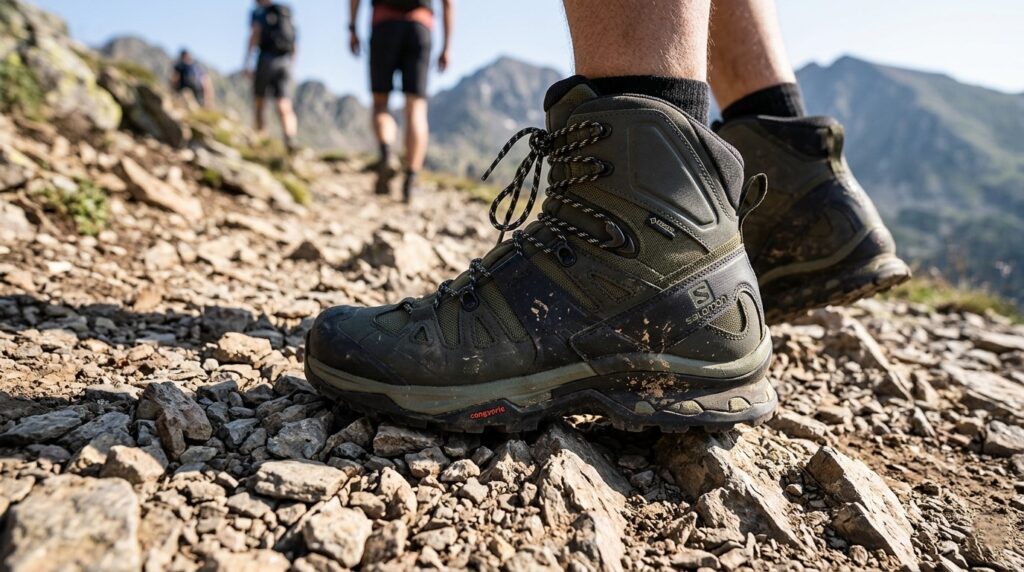
If you want the absolute best hiking boots for serious support, this is the benchmark. It’s a high-performance boot designed to protect your ankles and provide grip on the most unstable surfaces.
Pros and Cons
- Pros: Exceptional ankle stability; Gore-Tex waterproofing is flawless; deep lugs for mud/snow.
- Cons: Heavier than modern “sneaker-style” boots; can feel too stiff for flat, easy paths.
Key Features & Performance
The “Active Support” wings wrap around your foot, keeping you locked in even when carrying a 40lb pack. During real-world testing on granite slopes, the Contagrip outsole showed zero slippage. It’s a powerhouse for those who don’t want to worry about rolled ankles.
2. The Comfort King: Hoka Anacapa 2 GTX
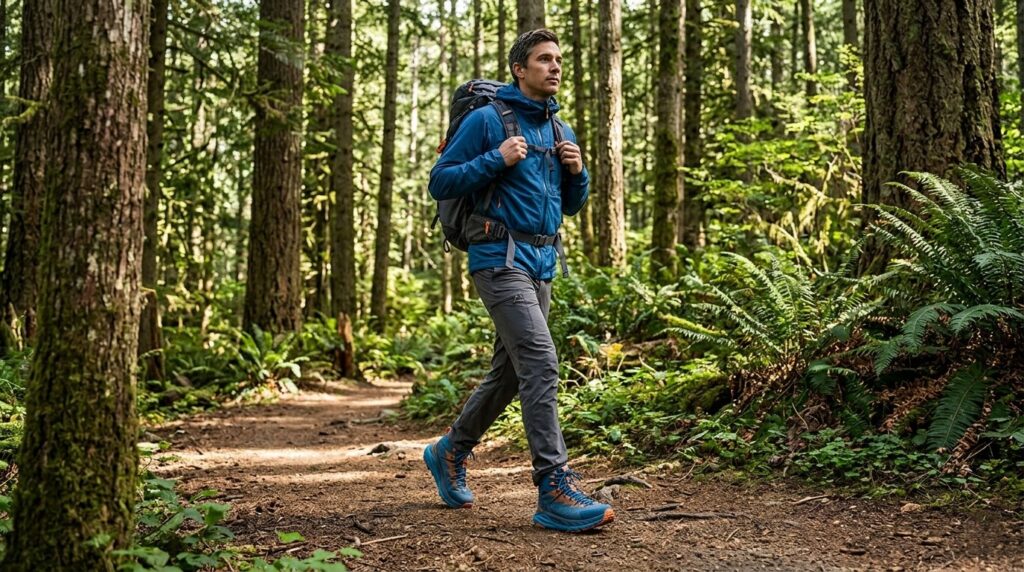
Hoka hiking boots have disrupted the industry by bringing maximalist running shoe tech to the trail.
Pros and Cons
- Pros: Incredible “cloud-like” feel; lightweight; smooth heel-to-toe transition.
- Cons: Oversized midsole can feel “clunky” on very narrow rock ledges; less durable than traditional leather.
Performance Analysis
Compared with similar products, the Anacapa 2 stands out for its rockered geometry. It practically pushes you forward. If you have knee pain or find traditional boots too “hard,” this is your best bet.
3. The Beginner Favorite: Merrell Moab 3
Often cited as the best hiking boots for men and women entering the sport, the “Mother of All Boots” (Moab) focuses on out-of-the-box comfort.
Pros and Cons
- Pros: No break-in period; very affordable; available in wide sizes.
- Cons: Not supportive enough for multi-day backpacking; waterproofing is decent but not elite.
How to Choose Hiking Boots: A Buyer’s Guide
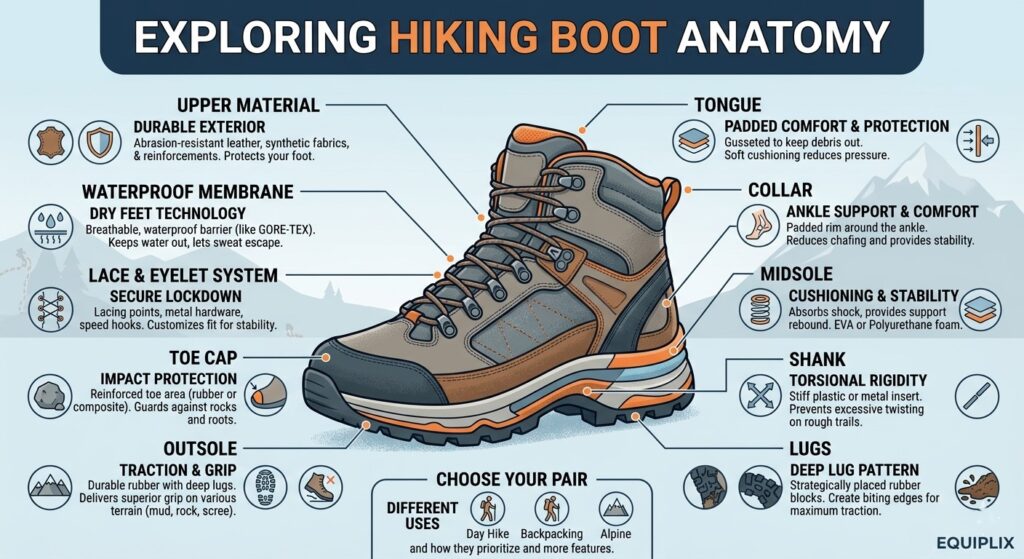
Knowing how to choose hiking boots comes down to three factors: Weight, Support, and Material.
1. Support vs. Weight
- Lightweight Boots: Best for day hikes on groomed trails.
- Mid-to-Heavyweight Boots: Essential for off-trail scrambling or carrying heavy packs.
2. Material Matters
- Synthetic: Lightweight, breathes better, breaks in faster.
- Full-Grain Leather: Extremely durable and water-resistant, but requires a long break-in period.
3. How Should Hiking Boots Fit?
This is the most common question we see. How should hiking boots fit? They should be snug but not tight. You want about a thumb’s width of space between your toes and the end of the boot to prevent “toe bang” on descents. Your heel should stay locked in place when walking uphill.
Performance Comparison Table
| Feature | Salomon Quest 4 | Hoka Anacapa 2 | Merrell Moab 3 |
| Weight (Pair) | 2 lbs 13 oz | 1 lb 14 oz | 2 lbs 1 oz |
| Waterproofing | Gore-Tex | Gore-Tex | Merrell M-Select |
| Stability | High | Medium | Low-Medium |
| Best Use | Backpacking | Day Hiking | Easy Trails |
Maintenance: Keeping Your Gear Alive
Learning how to clean hiking boots will double their lifespan.
- How to wash hiking boots: Use a soft brush and specialized footwear cleaner like Nikwax. Never put them in a washing machine, as the heat and agitation can destroy the adhesives and waterproof membranes.
- How to break in hiking boots: Start small. Wear them around the house with your hiking socks, then graduate to short neighborhood walks before hitting a 10-mile trail.
Where to Buy Hiking Boots
If you are wondering where to buy hiking boots, you have two main paths:
- Online: Sites like REI or Backcountry offer the best selection and return policies.
- Local: Searching for “where to buy hiking boots near me” will usually lead you to local outfitters where you can get a professional fitting, highly recommended for your first pair.
Frequently Asked Questions
https://amzn.to/3OlNLzXThe Salomon Quest 4 GTX remains the top choice for technical hiking, while the Hoka Anacapa 2 is the leader for comfort-focused day hiking.
Yes, if you prioritize joint protection and cushioning. They are less “rugged” than leather boots but significantly more comfortable for high-mileage days.
Synthetic boots often feel great immediately. Heavy leather boots can take 20–50 miles of walking before they truly mold to your feet.
Snug in the midfoot, but with plenty of room to wiggle your toes. If they are too loose, you’ll get friction blisters; too tight, and you’ll lose circulation.
Boots offer more ankle protection and stability for heavy loads. Shoes are lighter and more breathable, but leave your ankles vulnerable on uneven ground.
Yes, in mud and shallow stream crossings. However, they are warmer and dry more slowly than non-waterproof versions.
The Bottom Line…
What are the best hiking boots for you?
- Choose the Salomon Quest 4 if you are a serious hiker tackling peaks and carrying heavy gear.
- Choose the Hoka Anacapa 2 if you want to feel fast, light, and comfortable on day trips.
- Choose the Merrell Moab 3 if you are just starting and want a reliable, budget-friendly option.