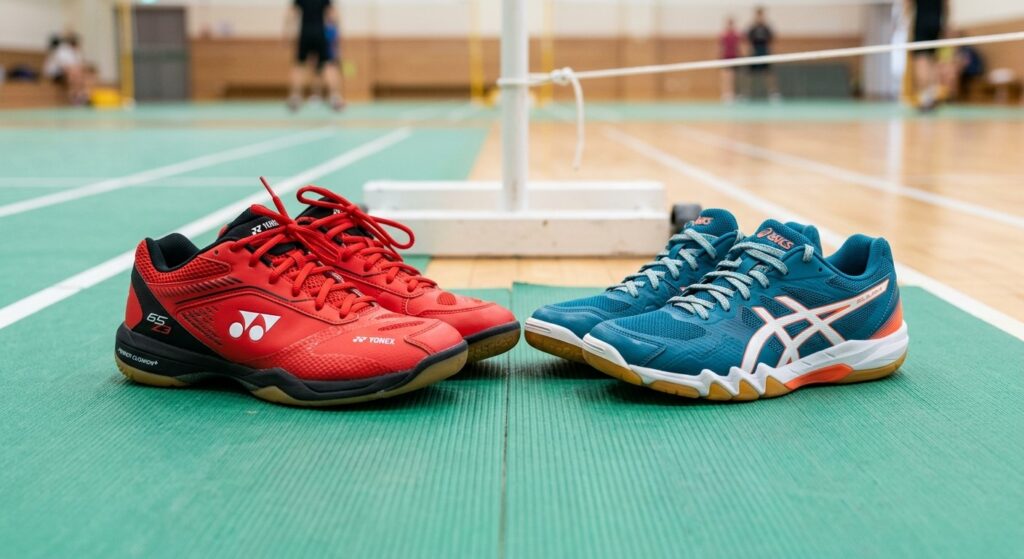
Finding the best badminton shoes is the single most important equipment decision you’ll make, even more than your racket. Unlike running or tennis, badminton requires constant lunging, jumping, and explosive lateral movements. The wrong shoe doesn’t just slow you down; it invites ankle rolls and knee strain.
At Equiplix, we cut through the marketing noise to bring you the top-performing badminton sports shoes available in 2026. Whether you need the feather-light speed of the Yonex Aerus series or the rock-solid stability of Asics Gel technology, this guide is designed to help you choose your next pair in under five minutes.
Top Picks: Comparison Table
| Feature | ASICS Gel-Rocket 10 Indoor Court Shoe | ASICS Upcourt 5 Indoor Court Shoe | Mizuno Wave Lightning Z6 Volleyball Shoe | Yonex Aerus Z2 Badminton Shoe |
| Best For | All-around | Beginners | Stability | Speed |
| Cushioning | GEL (good) | Basic | High | Moderate |
| Grip | Strong | Good | Strong | Elite |
| Durability | High | Medium | High | Medium |
| Weight | Medium | Medium | Medium-heavy | Very light |
Final Verdict
- Choose Gel-Rocket 10 → best balance
- Choose Upcourt 5 → cheapest solid option
- Choose Mizuno Z6 → best for aggressive movement
How to Choose Badminton Shoes
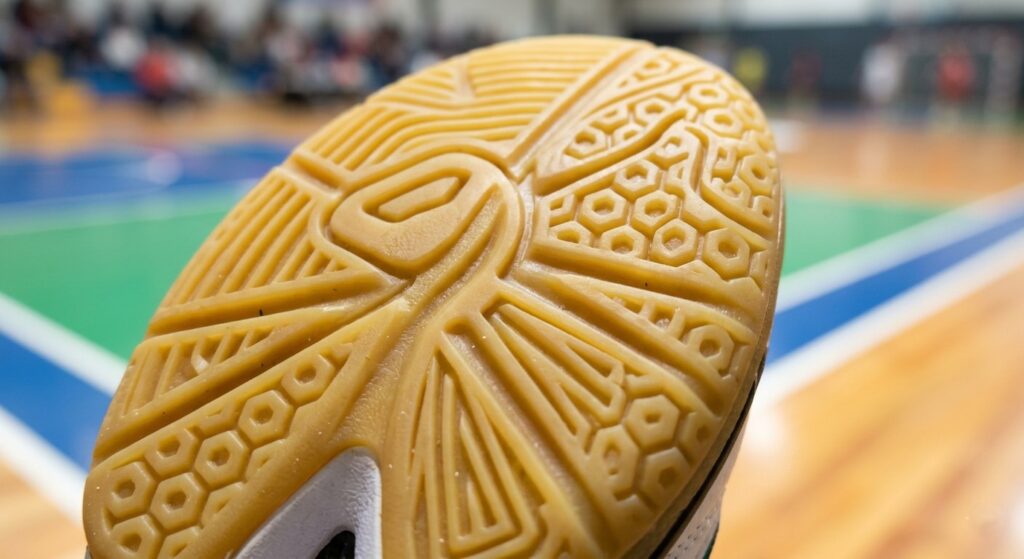
When looking for what to look for in badminton shoes, focus on these five functional pillars:
1. Grip (Non-Marking Rubber)
Always ensure the shoe has a gum rubber (yellowish/brown) or specialized non-marking sole. Badminton is played on PVC or wooden courts; a standard sneaker will slide, leading to injury.
2. Cushioning (Shock Absorption)
Badminton involves high-impact landings. Look for specialized tech like “Power Cushion” (Yonex) or “GEL” (Asics). This protects your knees and lower back from the “thud” of a jump smash.
3. Fit: Are badminton shoes supposed to be tight?
Yes, but with a caveat. They should be snug but not painful. If your foot slides inside the shoe, you will get blisters and lose power. Aim for a “locked-in” feel with about half a centimeter of space at the toes.
4. Lateral Support
Unlike running shoes, badminton shoes for men and women feature reinforced sides (claws) to prevent the shoe from deforming when you lunge sideways.
Cross-Sport Use: What You Need to Know
- Can badminton shoes be used for volleyball? Yes. Both require non-marking soles and vertical jump protection. However, volleyball shoes often have more heel cushioning.
- Can you use badminton shoes for pickleball? Only for indoor pickleball. The friction of outdoor asphalt will destroy a badminton sole in days.
- Are badminton and tennis shoes the same? No. Tennis shoes are heavier and built for abrasive outdoor courts. They lack the flexibility needed for badminton’s court-mats.
- Are badminton and squash shoes the same? Yes, they are almost identical in function. Both prioritize indoor grip and lateral movement.
Pros and Cons of Dedicated Badminton Shoes
Pros:
- Drastically reduces risk of ankle and knee injuries.
- Increases reaction speed due to high-traction soles.
- Lightweight materials reduce foot fatigue.
Cons:
- Specific to indoor courts (cannot be worn outside).
- High-end models can be expensive ($120+).
Frequently Asked Questions
Everything you need to know about the badminton shoes:
Start with a mid-range model like the Yonex 65 X or Asics Upcourt. You don’t need elite carbon plates yet; you need comfort and basic grip.
Absolutely. Many professional players prefer Asics for their superior durability and foot-mapping technology.
If you play 2–3 times a week, expect to replace them every 6–8 months. Once the gum rubber hardens or the “bounce” disappears, it’s time for a new pair.
Yes. They should be snug with minimal foot movement inside the shoe to prevent blisters and energy loss. However, ensure your toes aren’t cramped; aim for a $5\text{mm}$ gap at the tip.
Yes. Both sports happen on similar indoor surfaces and require non-marking soles. However, badminton shoes are lower to the ground for speed, while volleyball shoes often have thicker cushioning for heavy jumping.
Only indoors. If you play pickleball on a gym floor, badminton shoes are perfect. If you play on an outdoor asphalt court, the soft gum rubber will shred in a matter of days.
No. Tennis shoes are built for lateral sliding on clay or hard courts and are much heavier and stiffer. Using tennis shoes for badminton increases your risk of tripping because they are too “grippy” for indoor mats.
Yes. For all practical purposes, these are interchangeable. Both sports require the same non-marking grip, lightweight build, and lateral stability for indoor court play.