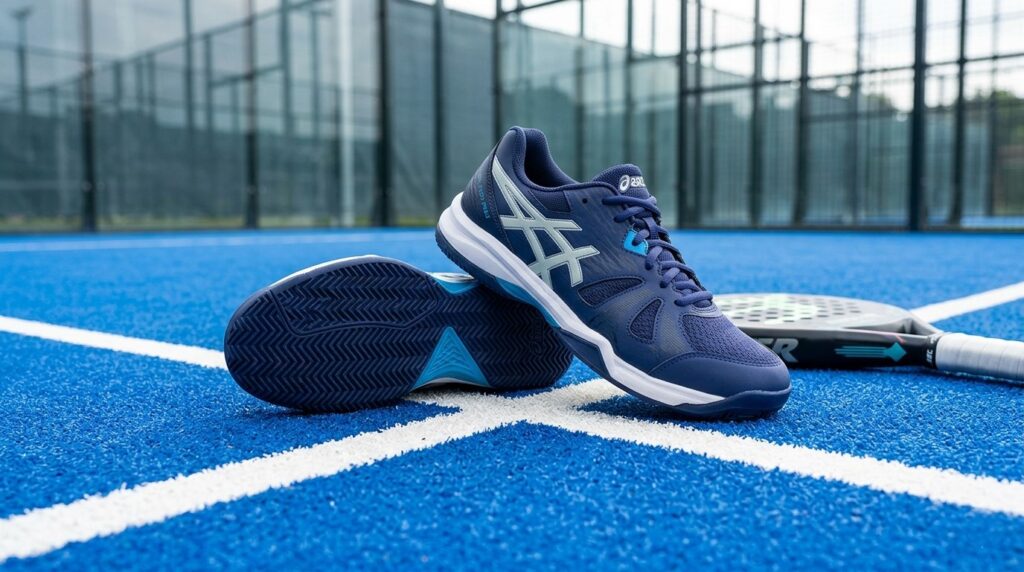
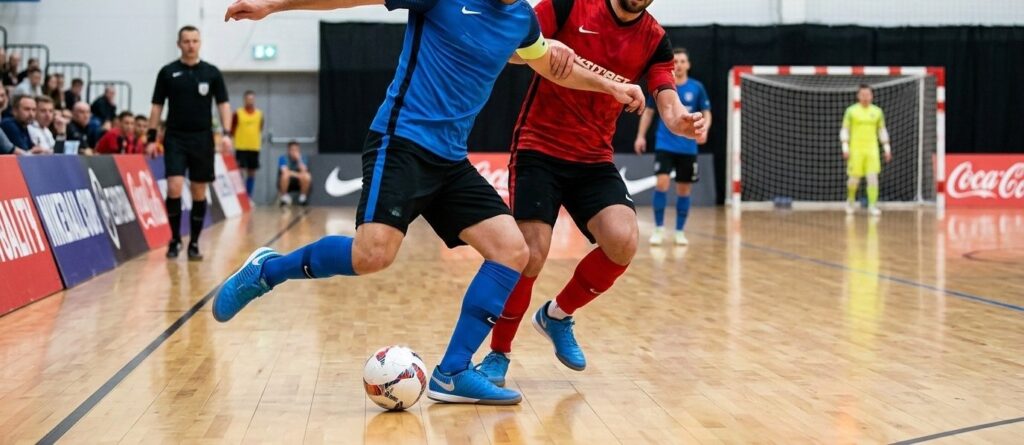
Choosing the best futsal shoes is the difference between making a sharp pivot and sliding out of bounds. Futsal is played on hard, fast surfaces like polished wood or synthetic courts, meaning your standard outdoor cleats are useless. To perform, you need specific indoor futsal shoes designed with non-marking rubber soles that provide maximum traction and a low profile for superior ball feel.
- Quick Take: Who Are These For?
- 1. The Performance Leader: Nike Lunar Gato II
- 2. The Precision Tool: Adidas Top Sala Competition
- Key Features Breakdown
- Performance Analysis: Futsal vs. Turf Shoes
- Comparison: Top 3 Best Futsal Shoes
- Would this be the best fit for you?
- All Questions About Futsal Shoes
- The Bottom Line…
Based on our thorough research and users’ feedback, we have narrowed down the massive market to the few pairs that actually improve your game. Whether you are looking for nike futsal shoes, adidas futsal shoes, or a budget-friendly pair for a beginner, this guide cuts through the marketing hype to help you decide.
Quick Take: Who Are These For?
The “Best Futsal Shoes” are for you if:
- You play on hard courts (gym floors, polished wood, or smooth concrete).
- You prioritize ball feel and “ping” over cushioning.
- You are a beginner or pro looking for shoes that won’t scuff the floor.
They are NOT for you if:
- You primarily play on 3G/4G artificial grass (you need turf shoes).
- You need heavy ankle support or maximalist running-style cushioning.
1. The Performance Leader: Nike Lunar Gato II
The Lunar Gato II is widely considered the gold standard for futsal shoes for men and women who play at a high level. It combines premium goat leather with Nike’s “Lunarlon” foam.
Pros:
- Very Comfortable: The Lunarlon foam is soft but responsive, absorbing impact on hard gym floors.
- Touch: The soft leather forefoot offers a natural feel for the ball.
- Durability: Added rubber “grind” on the toe area prevents peeling during toe-pokes.
Cons:
- Breathability: Leather holds heat more than synthetic mesh.
- Stretch: They will stretch over time, so you must buy them snug.
2. The Precision Tool: Adidas Top Sala Competition
When looking for adidas futsal shoes, the Top Sala is the specialist’s choice. It’s built specifically for the high-intensity, “stop-and-go” nature of the indoor game.
Pros:
- Lightweight: One of the lightest professional-grade shoes on the market.
- Grip: The rubber outsole is specifically engineered for lateral movements.
- Ventilation: Mesh side panels keep your feet cool during 40 minutes of sprinting.
Cons:
- Narrow Fit: Not the best choice for players with very wide feet.
- Protection: The thin upper prioritizes speed over foot protection from tackles.
Key Features Breakdown
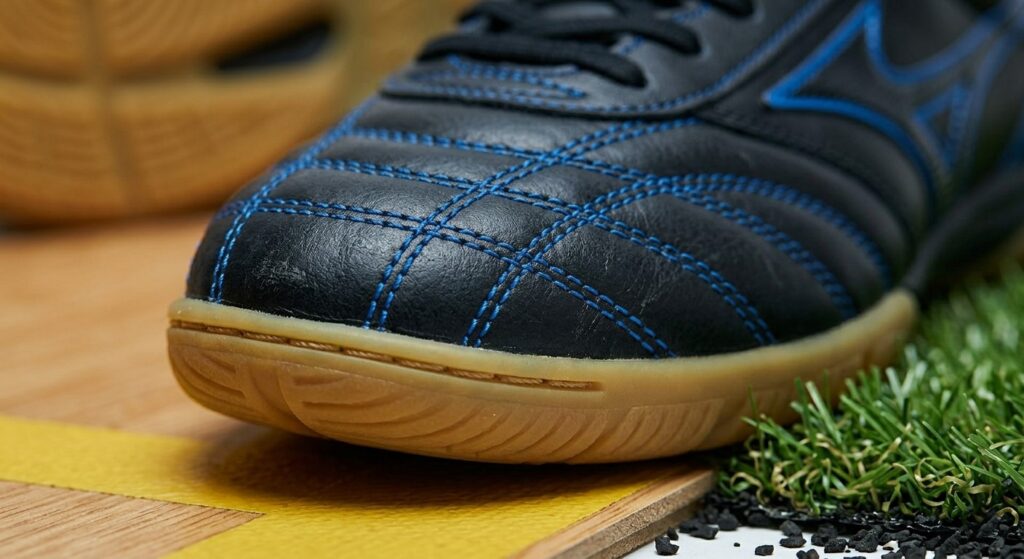
When deciding what shoes to wear for futsal, look at these three technical pillars:
1. The Outsole (Grip)
Futsal shoes must have a flat, non-marking rubber sole. Unlike turf shoes, which have small rubber studs, futsal outsoles use herringbone or circular pivot patterns. This allows you to rotate your foot without catching on the floor, preventing knee injuries.
2. The Midsole (Comfort)
Because you are playing on a surface with zero “give,” the midsole is vital. Look for EVA or specialized foams (like Nike’s Lunarlon or Adidas’ Lightstrike). If the shoe is too thin, you’ll feel joint pain after an hour of play.
3. The Upper (Control)
- Leather: Offers the best “molding” to your foot and a dampened touch.
- Synthetic: Lighter, doesn’t stretch, and usually more affordable for futsal shoes for beginners.
Performance Analysis: Futsal vs. Turf Shoes
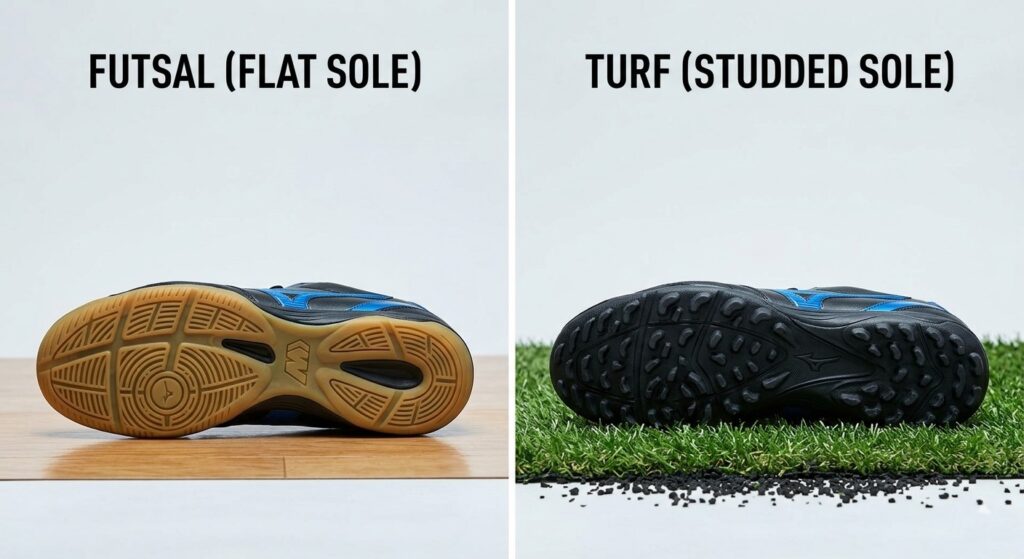
A common question is: can you wear turf shoes for futsal? The short answer is no. Turf shoes feature small rubber lugs designed to bite into synthetic grass. On a flat futsal court, these lugs create a very small surface area of contact, making the shoe incredibly slippery and dangerous.
Conversely, futsal shoes are flat to maximize the surface area against the floor. This provides the friction needed for those “dead-stop” turns. Compared with similar products designed for outdoors, futsal shoes also have a lower profile to help you get your foot under the ball for chips and lofted passes.
Comparison: Top 3 Best Futsal Shoes
| Feature | Nike Lunar Gato II | Adidas Top Sala | Joma Top Flex |
| Best For | All-around Comfort | Speed & Breathability | Durability & Value |
| Material | Goat Leather | Synthetic/Mesh | High-quality Leather |
| Cushioning | High (Lunarlon) | Medium | Medium |
| Fit | True to size (stretches) | Narrow | Runs large (size down) |
| Price Point | Premium | Mid-High | Mid-Range |
Would this be the best fit for you?
- Choose the Nike Lunar Gato II if: You want the most comfortable shoe possible and play multiple times a week.
- Choose the Adidas Top Sala if: You are a winger or forward who relies on pure speed and quick changes of direction.
- Choose a synthetic entry-level Nike Academy shoe if: You are looking for the best shoes for futsal beginners and don’t want to spend over $60.
Who wouldn’t benefit most?
If you play on “executive” turf or outdoor concrete courts with debris, these shoes will wear down too fast. For those environments, a dedicated turf shoe with a more rugged outsole is a better investment.
All Questions About Futsal Shoes
To find the best futsal shoes for your specific needs, you need clear answers to technical questions. This section covers everything from fit and performance to brand comparisons.
Definitions and Basics FAQs
Futsal shoes are specialized footwear designed for playing on hard, flat indoor surfaces. They feature a non-marking rubber outsole (no cleats or studs) and a low-profile design to aid in ball control with the sole of the foot.
Technically, they are nearly the same. However, specific indoor futsal shoes often feature a more reinforced toe-box (for toe-pokes) and a thinner midsole for better “court feel,” whereas general indoor soccer shoes might have more cushioning.
You should wear flat-soled, non-marking shoes specifically labeled for indoor or futsal use. Do not wear running shoes (too high, risk of rolled ankles) or outdoor cleats (no grip, will damage the floor).
The flat sole maximizes the surface area of rubber in contact with the hard floor. This creates the friction needed for quick pivots and allows the player to use the “sole-trap” technique to stop the ball instantly.
Yes. Regular sneakers lack the necessary grip for high-speed turns on polished wood or synthetic courts, and their foam can leave scuff marks that gym owners won’t appreciate.
Questions About Buying Guides
Focus on three things: Grip (gum rubber outsoles), Touch (leather or thin synthetic uppers), and Cushioning (EVA or specialized foam like Nike’s Lunarlon) to protect your joints from hard surfaces.
The best shoes for futsal beginners are typically mid-range synthetic models like the Nike Phantom Academy or Adidas Predator League. They offer durability and decent tech without a $100+ price tag.
Joma is the undisputed king for wide feet. The Joma Top Flex uses high-quality leather that stretches and a wider last that accommodates broader foot shapes better than narrow Nike or Adidas models.
The Nike Lunar Gato II is widely cited as the most comfortable due to its premium goat leather and thick Lunarlon cushioning, which feels more like a sneaker than a stiff performance shoe.
The Adidas Top Sala and Mizuno Sala series are known for high-traction outsoles that use specific rubber compounds designed for maximum stickiness on dusty gym floors.
Yes, if you play more than once a week. Premium shoes use better materials (K-leather or goat leather) that provide a significantly better touch and durability compared to the “plasticky” feel of budget versions.
Comparisons FAQs
No. Turf shoes have small rubber lugs. On a flat futsal court, these lugs act like skates, causing you to slide. It is a safety hazard for your ankles and knees.
Only on very flat, dry carpet-style turf. On modern 3G/4G turf (the kind with black rubber crumbs), futsal shoes will be extremely slippery, especially if the turf is damp.
The outsole. Futsal shoes are completely flat with a tread pattern; turf shoes have dozens of small rubber “bumps” or studs to provide traction on synthetic grass.
Absolutely. As long as the sole is flat and non-marking rubber, they are perfectly suitable for futsal.
No. Cleats (firm ground or soft ground) cannot penetrate a gym floor. You will have zero balance, zero grip, and you will likely be banned from the facility for damaging the surface.
Brand-Specific FAQs
The original Samba was a great futsal shoe 30 years ago. Today’s version is a “lifestyle” shoe. It’s too heavy and lacks the cushioning needed for modern competitive futsal.
They are classified as “Indoor Soccer Inspired,” but for performance, look at the Adidas Top Sala or Adidas Copa Pure.
It comes down to fit. Nike futsal shoes tend to be slightly more cushioned and use softer leathers, while Adidas futsal shoes often prioritize a lightweight, locked-in synthetic feel.
The Lunar Gato II for comfort and the Streetgato for a mix of street-style durability and court performance.
The Top Sala Competition for elite players and the Copa Gloro for those who prefer a classic leather feel.
Performance and Usage FAQs
Yes. The low-profile sole and thin upper allow your foot to be closer to the ball, which is vital for the “under-the-sole” ball manipulation common in futsal.
No. They are designed for lateral movement and short bursts, not the linear heel-to-toe strike of long-distance running. Using them for running will cause shin splints.
Yes. Many players wear futsal shoes for men and women as everyday sneakers because they are stylish, low-profile, and very durable.
On average, 6–12 months of regular play. Leather shoes may last longer if maintained, while lightweight synthetics might show wear sooner at the friction points.
Leather shoes (Goat, Calf, or K-Leather) will stretch about half a size. Synthetic shoes will not stretch much at all, so ensure they fit perfectly out of the box.
Fit and Sizing FAQs
They should be “snug but not painful.” You want your toes to be near the end of the shoe (about a 1/4 inch gap) to ensure maximum ball feel.
If buying leather, buy your true size or even a half-size down to account for stretching. For synthetic shoes, stick to your standard sneaker size.
Generally, yes. However, brands like Joma and Mizuno often run a half-size large, while Nike and Adidas tend to run slightly narrow.
For narrow feet, look at Adidas or the Nike Mercurial line. For wide feet, look at Joma, New Balance, or the Nike Tiempo line.
The Bottom Line…
The best futsal shoes for most players in 2026 remain the Nike Lunar Gato II due to its perfect balance of leather touch and impact protection. However, if you have narrow feet and want to feel as light as possible, the Adidas Top Sala is the better tool for the job.
Stop playing in sneakers or worn-out runners. A dedicated futsal shoe will not only improve your control but also protect your knees and ankles from the harsh impact of the court.