If you have ever felt your feet slide out from under you during a sharp lateral turn, you know that the best padel shoes are not just a luxury, they are a safety requirement. Padel is a game of explosive starts, sudden stops, and constant rotation.
Using standard running shoes or even certain hard-court tennis shoes on a sand-coated padel court is a recipe for ankle sprains and lost points.
- Quick Take: The Top Picks
- 1. Asics Gel-Padel Pro 5: The Stability King
- 2. Adidas Courtjam Bounce: Best for Beginners
- 3. Babolat Jet Premura 2: The Speed Demon
- Key Features Breakdown
- Performance Analysis: Padel vs. Pickleball & Tennis
- Comparison Table: Top 2026 Models
- Would this be the best fit for you?
- Who wouldn’t benefit most from it?
- To Sum Up…
- General Questions About Padel Shoes
- Level Based FAQs
- Fiting and Size FAQs:
- Comparison FAQs
- Brand Based FAQs
Based on our thorough research and users’ feedback, the right footwear does more than just provide grip; it stabilizes your kinetic chain so you can react faster without fear of injury. In this guide, we strip away the marketing fluff to highlight the only shoes worth your investment in 2026.
Quick Take: The Top Picks
- Best Overall: Asics Gel-Padel Pro 5 – The gold standard for stability and comfort.
- Best for Speed: Babolat Jet Premura 2 – Ultra-lightweight and explosive.
- Best for Beginners: Adidas Courtjam Bounce – Affordable, reliable, and no break-in period.
- Not Suitable For: Players looking for “all-court” sneakers to use for running or gym work. These are specialized tools for the padel sport only.
1. Asics Gel-Padel Pro 5: The Stability King
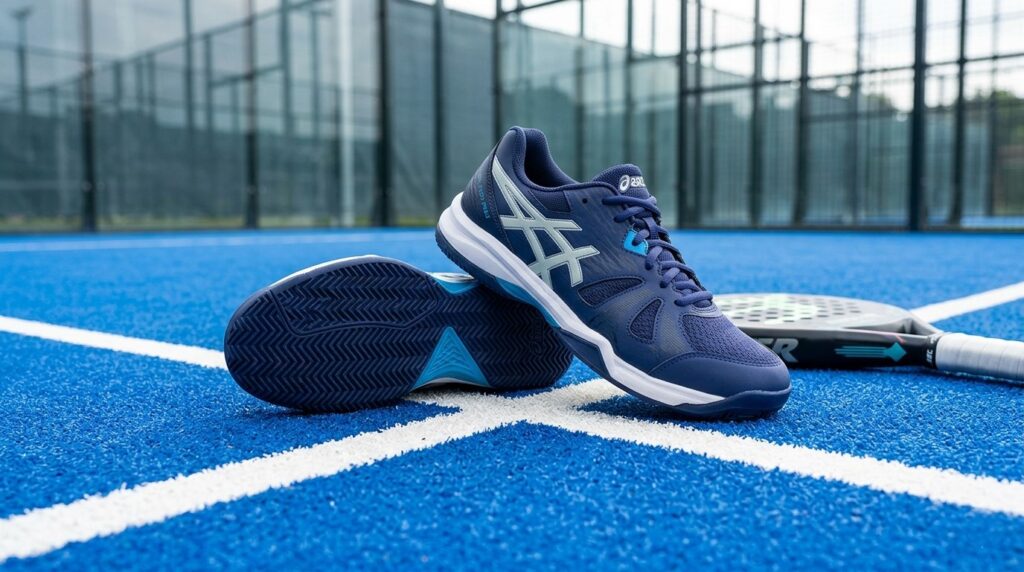
The Asics padel shoes lineup has long dominated the market for a reason. The Gel-Padel Pro 5 is engineered specifically for the high-impact lateral movements of padel tennis.
Pros:
- Legendary Cushioning: Features forefoot GEL technology that absorbs shock during heavy landings.
- TRUSSTIC System: A molded component under the midfoot that prevents the shoe from twisting, essential for preventing ankle rolls.
- Superior Grip: A deep herringbone pattern designed specifically for synthetic grass.
Cons
- Weight: Slightly heavier than “speed” focused models.
- Break-in: Can feel stiff for the first 1–2 sessions.
2. Adidas Courtjam Bounce: Best for Beginners
If you are transitioning into the padel sport and want men’s padel shoes or padel shoes women versions that don’t break the bank, the Courtjam Bounce is the move.
Pros:
- Instant Comfort: The “Bounce” midsole is flexible and comfortable right out of the box.
- Breathable: Mesh upper keeps feet cool during intense summer matches.
- Value: Professional look and feel at a sub-$100 price point.
Cons
- Durability: The sole wears down faster than premium Asics models if played on daily.
- Support: Lacks the extreme lateral reinforcement found in pro-tier shoes.
3. Babolat Jet Premura 2: The Speed Demon
While not a “Big Three” brand in traditional footwear, Babolat’s partnership with Michelin (the tire experts) has made their padel tennis shoes some of the grippiest in the world.
Pros:
- Michelin Sole: Developed specifically for the sand-on-grass friction of padel.
- Lightweight: One of the lightest high-performance shoes on the market.
- Flexibility: 360° Flex technology allows the forefoot to move naturally during sprints.
Cons
- Price: Usually at the top end of the market.
- Fit: Can feel very narrow; wide-footed players should look elsewhere.
Key Features Breakdown
When choosing the best padel shoes, ignore the colors and focus on these three mechanical pillars:
- The Outsole (Grip): Look for a deep herringbone (zigzag) pattern. This allows sand to move through the grooves so you don’t “hydroplane” on the court surface.
- Lateral Support: Unlike running, padel is side-to-side. Look for “claws” or reinforced TPU on the outer edge of the shoe to keep your foot centered.
- Rotation Points: Many Nike Padel shoes and specialized brands now include a circular “pivot point” on the ball of the foot to help you turn at the net without sticking.
Performance Analysis: Padel vs. Pickleball & Tennis
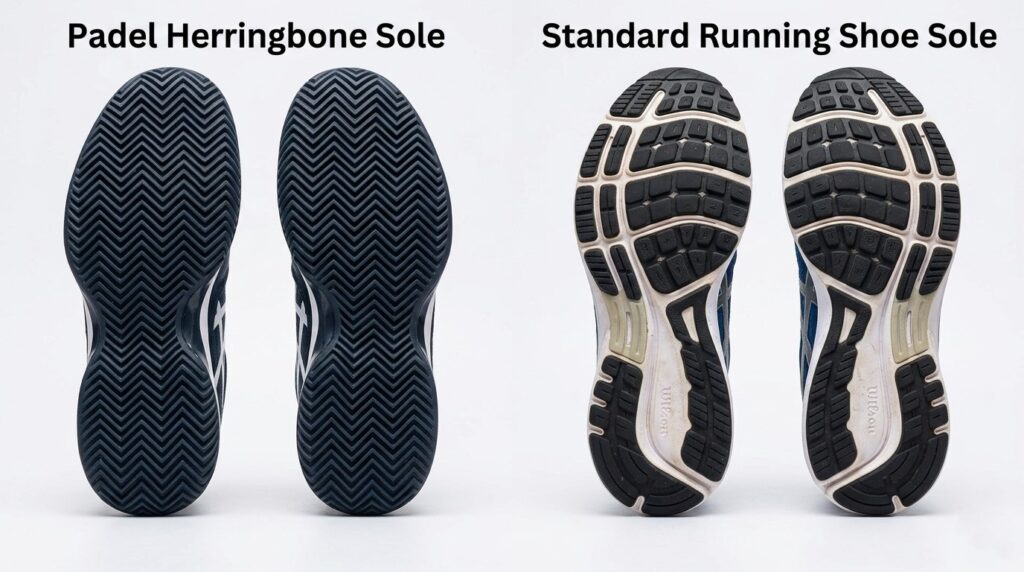
Compared with similar products in other racquet sports, padel shoes sit in a unique middle ground.
- Padel vs Pickleball: Pickleball is often played on hard, gritty surfaces. Padel is played on artificial turf with sand. Using a pickleball shoe on a padel court will result in zero traction.
- Padel vs Tennis: While clay-court tennis shoes work in a pinch, dedicated padel shoes have thinner soles to keep your center of gravity lower, which is vital for the quick “low-to-high” lunges common in padel tennis.
Comparison Table: Top 2026 Models
| Feature | Asics Gel-Padel Pro 5 | Adidas Courtjam Bounce | Babolat Jet Premura 2 |
| Best For | Stability & Support | Beginners / Budget | Elite Speed & Agility |
| Weight | Heavy (Stable) | Medium | Ultra-Light |
| Sole Type | Full Herringbone | Hybrid Adiwear | Michelin Padel Sole |
| Price Point | Mid-High | Low-Mid | High |
| Durability | 9/10 | 6/10 | 8/10 |
Would this be the best fit for you?
- Choose the Asics if you have a history of ankle rolls or play 3+ times a week.
- Choose the Adidas if you are a weekend warrior who wants a stylish, comfortable shoe for casual play.
- Choose the Babolat if you are a competitive player who relies on “get-there-at-all-costs” speed.
Who wouldn’t benefit most from it?
If you primarily play on hard tennis courts or do cross-training in the gym, these shoes are not for you. The specialized soft-rubber soles will shred on asphalt or concrete, making them a poor investment for multi-sport use.
To Sum Up…
Investing in the best padel shoes is the fastest way to improve your game without changing your swing. Stopping the “slide” allows you to set your feet, load your power, and hit more accurate shots.
For the ultimate balance of safety and performance, we recommend the Asics Gel-Padel Pro 5 for most players. If you’re just starting out, the Adidas Courtjam offers the best bang for your buck.
Stop sliding and start winning.
Frequently Asked Questions
General Questions About Padel Shoes
The herringbone (or “clay”) sole is the gold standard. It provides the necessary grip on artificial turf and helps manage the sand distribution on the court.
Prioritize three things: a herringbone (clay) outsole for grip on sand, lateral stabilizers to prevent ankle rolls, and a reinforced toe box to handle the dragging that occurs during deep lunges.
For a regular player (twice a week), a high-quality pair should last 6–8 months. Once the herringbone pattern begins to smooth out, your risk of injury increases significantly.
They are optimized for artificial turf with sand. Using them on hard abrasive surfaces (like concrete) will wear the soft rubber down in weeks, destroying the grip required for the padel court.
Not necessarily. Most padel courts use similar turf and sand setups. However, indoor courts may have less sand, meaning you can occasionally get away with a “Hybrid” sole, whereas outdoor courts almost always require a full herringbone pattern.
Yes, if you play more than once a week. Higher-end models use superior foam compounds and durable rubber outsoles that retain their “spring” and grip significantly longer than budget alternatives.
Level Based FAQs
For those starting the padel sport, the Adidas Courtjam Bounce or the Asics Gel-Game 9 are excellent entry-level choices. They offer a balance of essential grip and comfort without the high price tag of professional-tier models.
Advanced players should look at the Babolat Jet Premura 2 or the Asics Solution Swift FF. These provide the high-response cushioning and aggressive traction needed for fast-paced, high-frequency play.
Fiting and Size FAQs:
They should be snug but not restrictive. Ensure you have about a thumbnail’s width of space at the toe. Your heel must feel locked in; if it slips during a lunge, the shoe is too big or lacks proper support.
Some brands, like Wilson and certain K-Swiss models, are known for a wider fit. Most adidas padel shoes tend to be narrower, so wide-footed players should look for “Wide” specific designations.
Because padel involves constant jumping and landing, arch support is vital to prevent plantar fasciitis. If the factory insole feels flat, many players swap them for sports-specific orthotics.
Comparison FAQs
Absolutely. By providing the traction needed to stop and start instantly, they allow you to reach balls you would otherwise miss. Proper shoes also reduce muscle fatigue by providing better energy return.
While the technology is similar, the best padel shoes for men often feature a wider heel and higher weight tolerance. The best padel shoes for women are generally built on a narrower last to match female foot anatomy.
Yes, they aren’t just different colors. Women’s models are usually narrower in the heel and have a different flex point in the midsole to account for a lower average body weight.
No. Pickleball is mostly played on hard courts (like tennis) or indoor gym floors. Padel shoes are specifically designed for the sliding and pivoting mechanics found on synthetic grass.
No. While they look similar, padel tennis shoes are optimized for vertical jumps and lateral pivots, whereas tennis shoes are designed for longer baseline sprints.
Brand Based FAQs
They are world-class. Adidas is known for their “Bounce” and “Boost” technologies, which offer some of the best energy return in the industry, making them a favorite for players who want a “springy” feel.
Asics padel shoes are widely considered the industry benchmark for grip due to their high-quality rubber compounds and deep, consistent herringbone patterns that clear sand efficiently.
Yes, but only if you select their specific “Clay” or “Padel” models. Their standard hard-court tennis shoes will be too slippery.