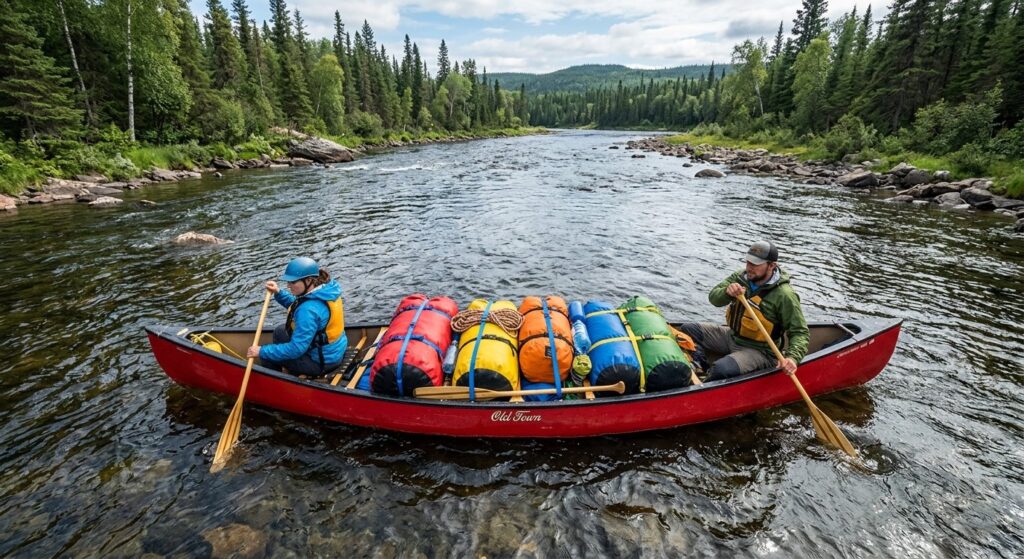
Nothing kills a trip faster than a soaked sleeping bag or a dead phone. If you are looking for the best canoeing bags, you need gear that handles submersion, abrasion, and the awkward dimensions of a canoe hull.
This guide cuts through the noise to show you exactly which dry bags will keep your gear bone-dry, whether you’re on a day trip or a week-long expedition.
Quick Take (Top Picks)
- Best Overall: SealLine Discovery Deck – Unmatched durability and a purge valve to save space.
- Best for Value: Earth Pak Waterproof Dry Bag – Reliable protection at a price that leaves room for more gear.
- Best for Expeditions: NRS Bill’s Bag – Huge capacity with backpack straps for easy portaging.
Best Canoeing Bags Comparison
Brand Comparison Table
| Brand | Gear Type | Strength | Weakness | Our Recommendation | Get It on Amazon |
| SealLine | Discovery Deck | Purge valve & heavy-duty material | Slightly stiffer to roll | ⭐ Our Pick | See Prices |
| NRS | Bill’s Bag | High volume & comfortable straps | Heavy when empty | Best for portaging | See Prices |
| Earth Pak | Original Dry Bag | Affordable & includes phone case | Less puncture resistance | Best for beginners | See Prices |
Comparison by Skill Level
| Level | Gear Type | Why It Stands Out | Best Use Case | Get It on Amazon |
| Beginner | Earth Pak 20L | Simple roll-top and very intuitive. | Afternoon lake paddles. | SEE PRICES |
| Intermediate | Sea to Summit Big River | Exceptional weight-to-strength ratio. | Weekend river camping. | SEE PRICES |
| Advanced | SealLine Boundary Pack | Fully submersible with harness system. | Multi-day whitewater trips. | SEE PRICES |
Pros and Cons of Each Category
| Category | Pros | Cons |
| Heavy-Duty PVC | Extremely durable; resists rocks/sand. | Heavier; harder to fold in cold weather. |
| Lightweight Nylon | Packs down small; very flexible. | Can tear if dragged across gravel. |
| Backpack Style | Essential for portaging between lakes. | Straps can snag on canoe thwarts. |
Key Features Breakdown
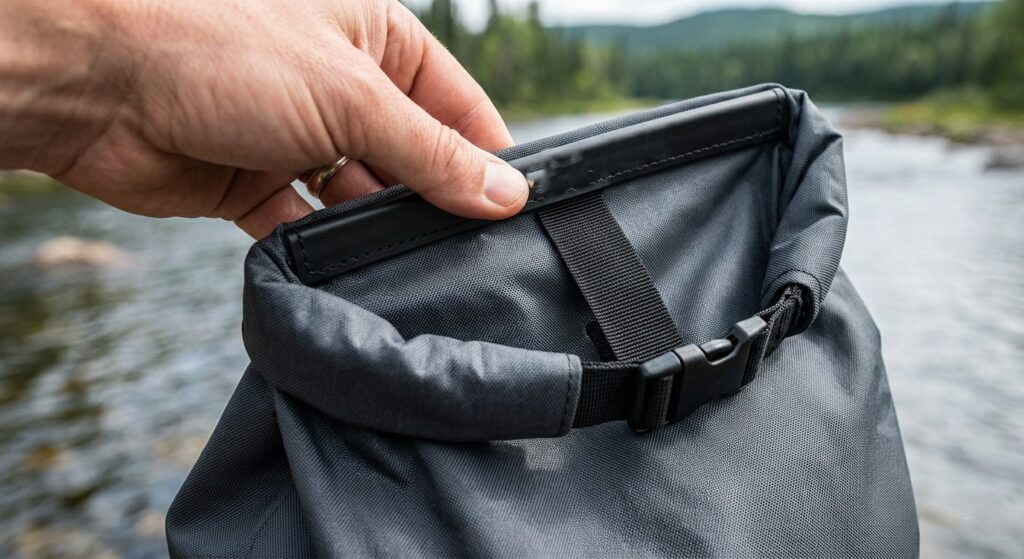
- Materials: Look for 500D PVC or TPU-coated nylon. PVC is the gold standard for best canoeing dry bags because it handles the friction of being shoved into a canoe hull.
- Closure System: Roll-top closures are standard. You need at least three rolls to ensure a watertight seal.
- Purge Valves: High-end bags include a one-way valve to scream air out after sealing, making the bag leaner and easier to stack.
- Attachment Points: D-rings are mandatory. You must be able to lash your bag to the canoe in case of a flip.
Real Performance
Based on our thorough research and users’ feedback, performance varies wildly between “water-resistant” and “submersible.”
How it performs in real use: The SealLine and NRS models excel in “dump” scenarios. If your canoe capsizes in a rapid, these bags remain buoyant and watertight under pressure. Compared with similar products, cheaper “lightweight” bags are great for splash protection but often seep water through the seams if they sit in a puddle at the bottom of the boat all day.
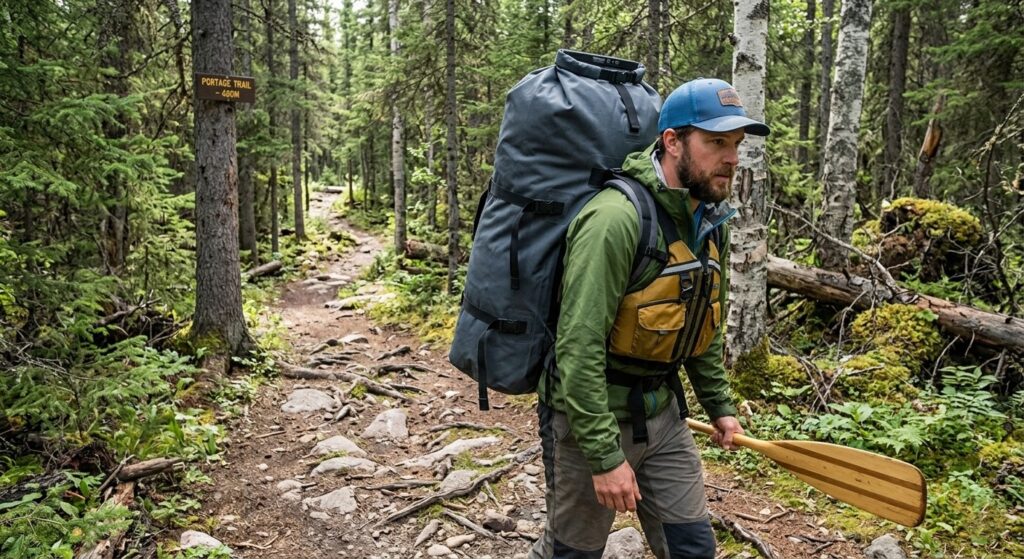
Who it works best for: The best dry bags for canoe camping are those that feature backpack straps. If your route involves portaging (carrying your canoe and gear overland), a bag without straps is a massive liability.
Comparison Summary
- Choose SealLine if you want a “buy it for life” bag that handles rough treatment.
- Choose Earth Pak if you are a recreational paddler on a budget.
- Choose NRS if you are hauling 65L+ of gear and need to carry it on your back.
- Avoid ultra-lightweight dry sacks (intended for hiking) as primary canoe bags; they will likely puncture against the gunwales or rocks.
Final Take
- Who should buy it: Anyone taking electronics, clothing, or camping gear onto open water.
- Who should skip it: If you only carry a water bottle and a towel you don’t mind getting damp, a simple dry sack is enough.
- Best Overall Pick: SealLine Discovery Deck. It strikes the perfect balance of weight, extreme durability, and ease of use.
Frequently Asked Questions
The SealLine Discovery Deck is widely considered the best due to its 300D sides and 1000D bottom, ensuring it won’t leak even when dragged.
Yes. Unlike standard waterproof bags, canoe-specific bags are shaped to fit in the bow or stern and are built with thicker materials to survive the constant abrasion of the boat’s interior.
Check for welded seams (not sewn) and at least two D-ring lash points.
Overstuffing the bag. If you can’t get three solid rolls on the closure, the bag will leak if submerged.