Choosing the best snowboard helmets isn’t just about style or keeping your ears warm, it’s about high-tech impact protection that can literally save your life during a high-speed collision or an icy edge-catch.
Whether you are a park regular or a backcountry explorer, your helmet needs to handle both direct hits and the rotational forces that cause concussions. We have cut through the marketing fluff to bring you only the top-rated gear that balances safety, comfort, and real-world durability.
Our Top Picks at a Glance
- Best Overall: Smith Vantage 2 Mips – The gold standard in protection, featuring Koroyd and Mips for ultimate energy absorption.
- Best for Freestyle: Smith Method Pro Mips – Ultra-lightweight and sleek, designed to stay out of your way during spins and flips.
- Best for Families: Giro Ledge Mips – Rugged hardshell construction that offers pro-level safety at a price that fits any budget.
Best Snowboard Helmets Comparison
Finding the right helmet depends on who is wearing it and where they are riding. The following tables break down the top contenders by user type and skill level.
A. By User Type
Safety tech should be universal, but fit and features often vary between riders. These picks ensure everyone on the mountain is protected with gear designed for their specific needs.
| Category | Gear Type | Key Benefit | Best For | See on Amazon |
| Men | Smith Vantage 2 Mips | 40 Adjustable Vents | All-Mountain Performance | See Price |
| Women | Smith Vida Mips | Lightweight & Plush Liner | Comfort-Focused Riders | See Price |
| Kids | Smith Descend Jr Mips | Easy-Adjust Fit System | Growing Shredders | See Price |
B. By Skill Level
Newer riders need durability for frequent low-speed tumbles, while experts require advanced ventilation and lightweight materials for high-output backcountry missions.
| Level | Gear Type | Why It Stands Out | Best Use Case | See on Amazon |
| Beginner | Giro Ledge Mips | Bombproof ABS Hardshell | Resort Learning | See Price |
| Intermediate | Smith Method Pro | Minimalist & Ultra-Light | Park & Freestyle | See Price |
| Advanced | Smith Summit Mips | Triple-Certified Safety | Backcountry & Touring | See Price |
C. Best Brands Comparison
Not all brands are created equal when it comes to “brain-saving” technology. Here is how the big three stack up for the 2025/2026 season.
| Brand | Gear Type | Strength | Weakness | Our Pick | See on Amazon |
| Smith | Vantage 2 | Zonal Koroyd Tech | High Price Point | ⭐ The Best | See Price |
| Giro | Owen Spherical | Spherical Mips Tech | Heavier weight | Top Safety | See Price |
| Anon | Merak WaveCel | WaveCel Impact Cell | Limited Venting | Tech Innovator | See Price |
Pros and Cons of Each Category
Understanding the trade-offs between different helmet styles is vital before hitting “buy.” Here is the honest breakdown of what you get (and what you lose) with each category.
| Category | Pros | Cons |
| Premium (Vantage 2) | * Maximum ventilation (40 vents) * Hybrid shell is light yet tough | * Most expensive option * Can feel bulky to some |
| Budget (Ledge/Rodeo) | * Extremely durable hardshell * Low-profile skate style | * Fixed vents (colder/hotter) * Heavier materials |
| Specialized (Summit) | * Triple-certified for climbing/snow * Superior weight-to-safety ratio | * Minimal insulation * Not ideal for deep winter resort days |
Key Features Breakdown
When comparing the best snowboard helmets, ignore the colors and focus on these three mechanical pillars that actually affect your safety and comfort.
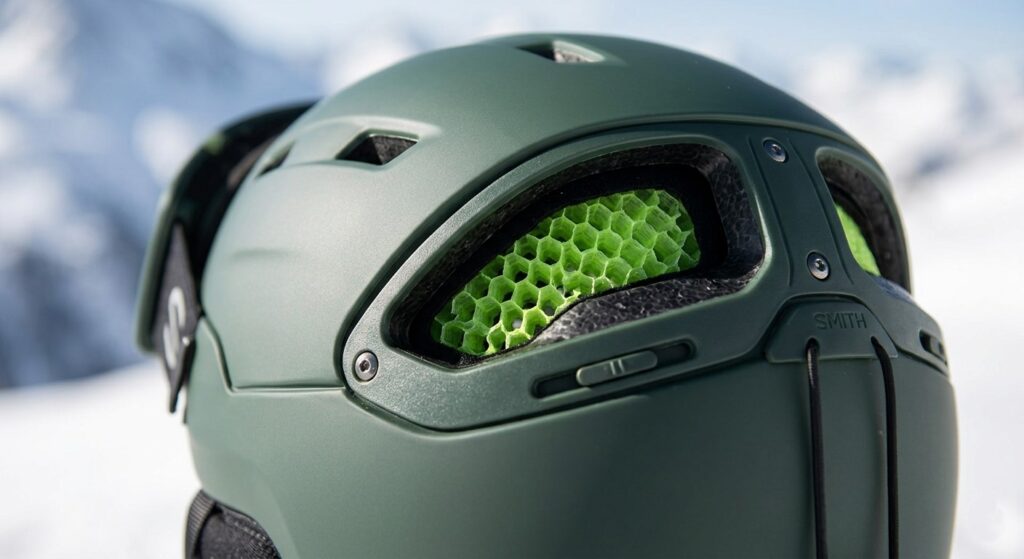
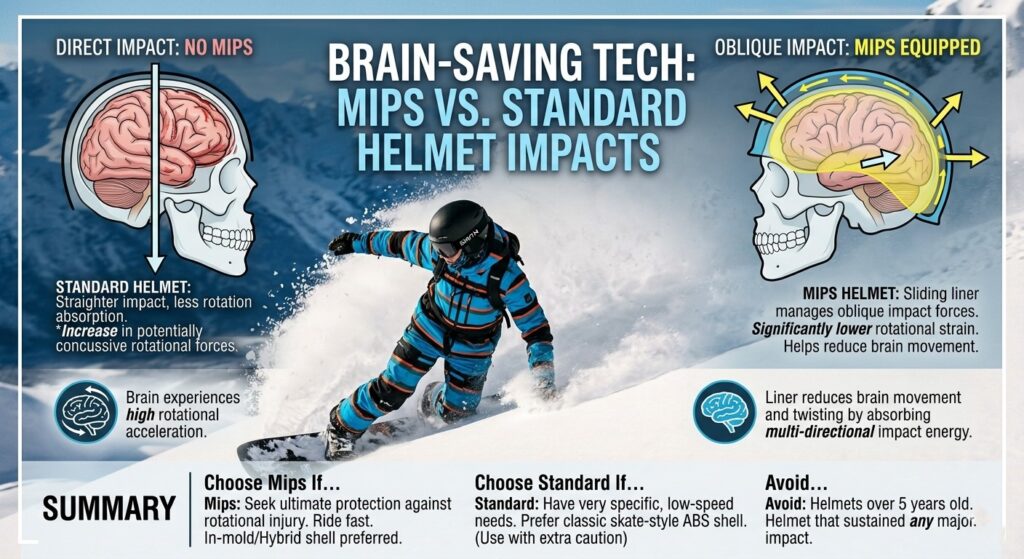
- Impact Technology: Look for Mips (Multidirectional Impact Protection System) or Smith’s Koroyd. These systems allow the helmet to slide slightly during a hit, reducing the “brain slosh” that causes concussions.
- Ventilation Control: High-end helmets feature adjustable vents. This allows you to dump heat on a sunny spring day or seal the helmet shut during a mid-winter blizzard.
- Goggle Integration: If you buy a Smith helmet, it’s best to use Smith goggles. This eliminates the “gaper gap” (the cold spot on your forehead) and ensures your goggles don’t fog up.
Real Performance
Based on our thorough research and users’ feedback, the Smith Vantage 2 Mips consistently outperforms the competition in all-day comfort. Compared with similar products, the hybrid construction makes it feel significantly lighter on your neck during long days. However, where it struggles is the price; it is a heavy investment for someone who only rides twice a year.
In contrast, the Giro Ledge Mips is the “hammer” of the group. It can take a beating in the park or the trunk of your car and keep performing. It lacks the fancy dials of more expensive units, but it provides the same core Mips protection at a fraction of the cost.
Comparison Summary
- Choose the Smith Vantage 2 if you ride 20+ days a season and want the absolute best in safety and temperature control.
- Choose the Giro Ledge Mips if you are on a budget or prefer the classic “skate” look without sacrificing brain protection.
- Avoid the Smith Summit if you primarily ride lifts; its lack of insulation is designed for hikers and splitboarders who generate their own heat.
Final Take
Who should buy it: Any rider currently wearing a helmet older than 5 years or one that has already sustained a major impact.
Who should skip it: No one. If you are on a snowboard, you need a helmet. Period.
Best overall pick: The Smith Vantage 2 Mips. It offers the most comprehensive safety suite available in 2026.
Find more winter sports gear, or browse our full Safety and Protection section.
Frequently Asked Questions
Deciding on safety gear often leads to technical questions. We have answered the most common concerns to help you shop with confidence.
The Smith Vantage 2 Mips is currently the best-rated all-mountain helmet due to its dual-ventilation system and Koroyd impact protection.
Yes, if you value ventilation and weight. While budget helmets offer great safety, expensive models use “Hybrid” shells that are much lighter and prevent neck fatigue.
Always ensure the helmet has Mips or an equivalent rotational protection system. Also, check for “ASTM F2040” or “CE EN1077” certifications to ensure it meets safety standards.
Beginner helmets are often “Hardshell” (heavier/durable/cheaper), while advanced helmets are “In-Mold” or “Hybrid” (lighter/better vents/more expensive).
Look for helmets featuring Mips Spherical, WaveCel, or Koroyd. These technologies are specifically designed to absorb energy more efficiently than standard foam.