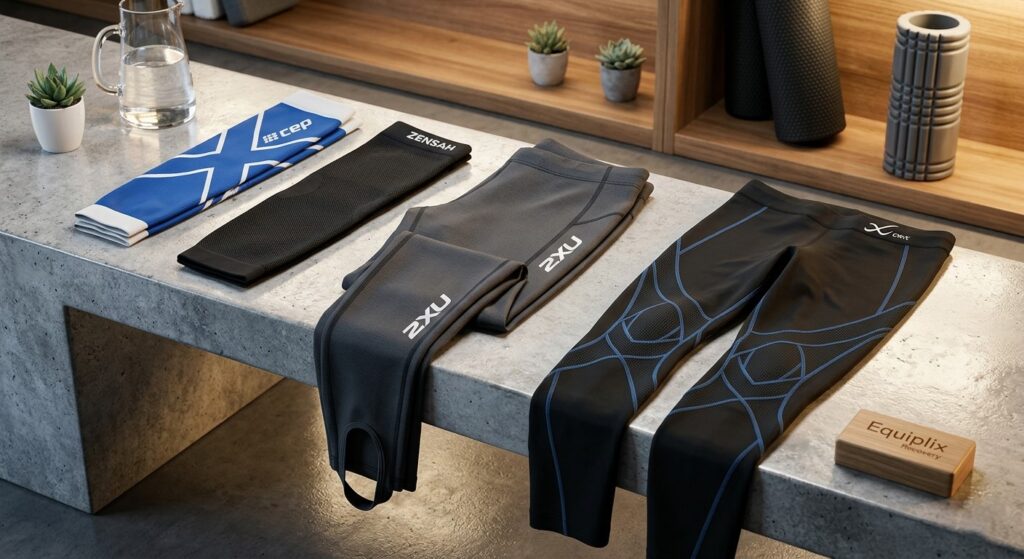
Most recovery gear is just overpriced spandex that loses its stretch after three washes. This guide cuts through the marketing noise to identify the best compression gear for recovery that actually moves blood, reduces soreness, and lasts through a full season of training.
Top Picks:
- Best Overall: 2XU Force Compression Tights – The graduated compression profile is the industry gold standard for flushing lactic acid.
- Best Premium: CEP Recovery Pro Tights – Medical-grade precision with a knit that maintains consistent pressure for 24+ hours.
- Best Budget: Under Armour HG Armor – Decent entry-level compression that provides comfort and heat management at half the price.
- Best Sleeves: Zensah Tech+ Sleeves – Targeted ribbing that treats shin splints and calf fatigue better than any full sock.
Comparison Tables
A) By User Type
| User Goal | Top Recommendation | Benefit | Shop Now |
| Leg Recovery | 2XU Force Tights | Graduated pressure | See on Amazon |
| Shin/Calf Pain | Zensah Tech+ Sleeves | Targeted ribbing | See on Amazon |
| Post-Arm Day | Shock Doctor Sleeves | Bicep/Forearm focus | See on Amazon |
| Travel/Office | CEP Recovery Socks | All-day comfort | See on Amazon |
B) Best Brands Comparison
| Brand | Durability | Compression Level | Our Pick | Shop Now |
| 2XU | High | Firm/Graduated | WINNER | Buy from Amazon |
| CEP | Elite | Medical Grade | Buy on Amazon | |
| Under Armour | Medium | Mild | See on Amazon | |
| Skins | High | Dynamic | Amazon Prices |
Why These Work (Real-World Insight)
Cheap compression gear is just “tight clothing.” Real recovery gear uses graduated compression, meaning it is tightest at the extremities and loosens toward the heart. This mechanical squeeze is what actually assists venous return.
- Who should buy what: If you are a runner or heavy lifter, invest in tights. If you specifically suffer from “heavy legs” or shin splints, sleeves offer more versatility and targeted relief.
- What fails in cheap versions: The stitching. Low-end gear uses single-stitch seams that chafes your skin and loses 20% of its elasticity after five trips through the dryer.
Key Buying Factors
- Build Quality: Look for flatlock seams to prevent skin irritation during long recovery sessions.
- Comfort: Fabric must be moisture-wicking; if it traps sweat, you won’t wear it long enough to see results.
- Performance: Check for “mmHg” ratings (15–30 is the sweet spot for recovery).
- Durability: High-denier yarns (like those in 2XU) resist “bagging out” at the knees.
- Value: A $90 pair that lasts two years is cheaper than a $30 pair that dies in two months.
Equiplix Data Point: Research indicates that compression garments with 20-30 mmHg are the most effective for reducing Creatine Kinase (a marker of muscle damage). If your gear feels like “just tight leggings,” it’s likely under 15 mmHg and won’t provide significant recovery benefits.
Final Recommendation
- Who should buy: Athletes training 4+ days a week or anyone standing for 8+ hours a day.
- Who should NOT buy: People looking for “weight loss” gear or those with circulatory conditions (consult a doctor first).
- Best Single Pick: 2XU Force Compression Tights. They offer the perfect balance of medical-grade tech and athletic durability.
FAQ
The 2XU Force series is currently the most effective for general athletic recovery due to its patented PWX fabric.
Yes, but only if worn for 2–4 hours post-workout. It reduces perceived muscle soreness (DOMS) and swelling significantly compared to passive rest.
The Compression Profile. If it isn’t “graduated” (tighter at the ankle/wrist), it isn’t helping your blood flow; it’s just tight pants.
Beginners should start with sleeves (lower cost, high impact). Advanced athletes need full tights to address the glutes and hamstrings.
Buying a size too large. Compression should feel slightly “difficult” to put on. If it slides on like pajamas, it’s not working.