What Is a Graphite Badminton Racket?
When we talk about a carbon graphite badminton racket, we are referring to a frame constructed from highly organized carbon atoms arranged in a crystalline structure. Manufacturers use carbon fiber composites because they offer an exceptional strength-to-weight ratio.
If you want to play badminton with power, precision, and speed, a graphite badminton racket is the single best upgrade you can make. Unlike heavy, old-school aluminum frames, carbon graphite material is incredibly lightweight yet structurally rigid. This unique combination allows manufacturers to engineer thin, aerodynamic frames that snap back quickly, delivering massive shuttle speed without straining your wrist.
Graphite rackets dominate the modern market because they absorb shock better than metal, reduce muscle fatigue, and offer an unmatched blend of strength-to-weight performance.
Our Top Picks at a Glance
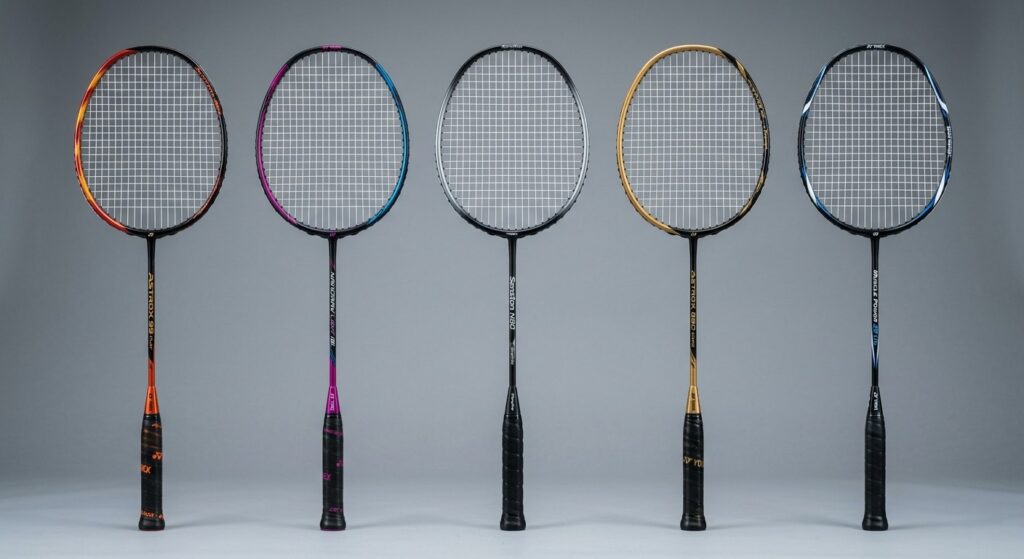
| Product Name | Best For | Weight | Balance | Skill Level | Key Strength | Rating (10) |
| YONEX Astrox 99 Play | Best Overall | 4U (Avg. 83g) | Head-Heavy | Beginner / Intermediate | Explosive Smash Power | 9.7 / 10 |
| YONEX Nanoray Light 18i | Best for Speed & Agility | 5U (Avg. 77g) | Head-Light | Beginner / Intermediate | Ultra-fast Defensive Maneuverability | 9.5 / 10 |
| Senston N80 | Best Budget/Value Pick | 3U (Avg. 85g) | Even Balance | Beginner | High Durability and Affordable Entry Point | 9.1 / 10 |
| YONEX Astrox 88D Game | Best for Backcourt Power | 4U (Avg. 83g) | Head-Heavy | Intermediate | Rear-court Domination and Steep Smashes | 9.5 / 10 |
| YONEX Muscle Power 29 Lite | Best Low-Cost Brand Racket | 3U (Avg. 85g) | Even Balance | Beginner | Forgiving Sweet Spot and Classic Frame Durability | 9.0 / 10 |
Best Graphite Badminton Rackets: 5 Top Picks Worth Buying
1. YONEX Astrox 99 Play
Short Verdict
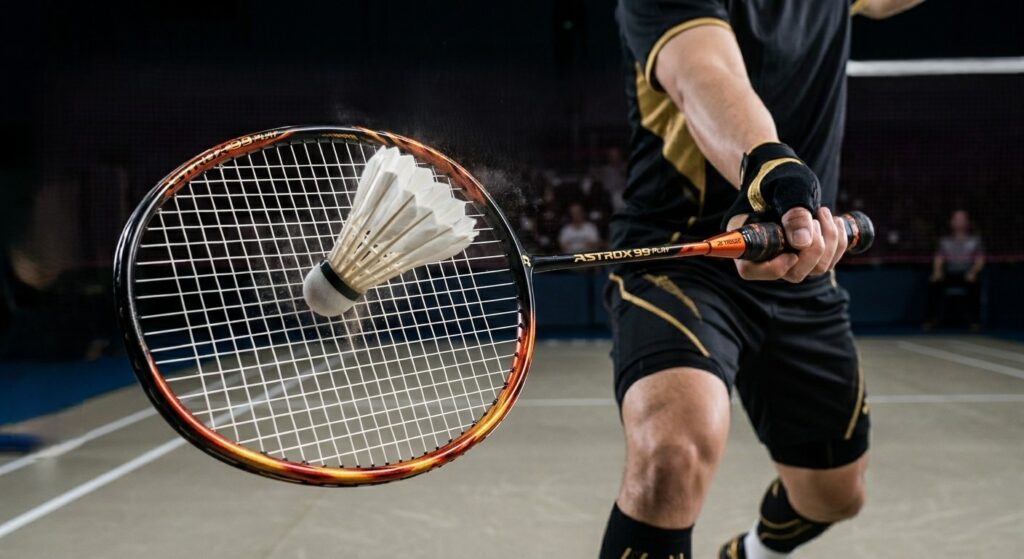
The YONEX Astrox 99 Play is the ultimate entry-to-intermediate weapon for players who want the devastating smash power of a professional racket without the unforgiving, stiff feel.
- Pros:
- Generates massive smash power via a targeted head-heavy balance.
- Fully graphite construction minimizes vibration on off-center hits.
- Isometric head shape offers a massive, highly forgiving sweet spot.
- Highly affordable version of the world-class Astrox 99 Pro.
- Cons:
- Slightly slower in defensive mid-court flat exchanges.
- Factory string tension is a bit low for advanced competitors.
Key Specs
- Weight: 4U (Average 83g)
- Flex: Medium
- Balance: Head-Heavy
- Material: Full Carbon Graphite
- String Tension: Up to 28 lbs
- Skill Level: Beginner to Intermediate
Real-World Performance
During aggressive baseline rallies, the Astrox 99 Play punches well above its price tag. The head-heavy distribution creates excellent momentum, allowing you to drive deep clears and steep smashes with minimal effort. Because the shaft has a medium flex, it acts like a whip, giving developing muscles a helpful power boost.
In terms of defense and net play, it feels slightly slower than an even-balanced model, but the 4U weight ensures your wrist won’t tire out during extended matches. The frame is highly forgiving, absorbing shock cleanly when you misjudge a fast-moving shuttlecock.
Why We Recommend It
It successfully brings premium, attack-minded technology down to an accessible price point. It is the best graphite badminton racket for players transitioning from recreational play into competitive club matches.
2. YONEX Nanoray Light 18i
Short Verdict
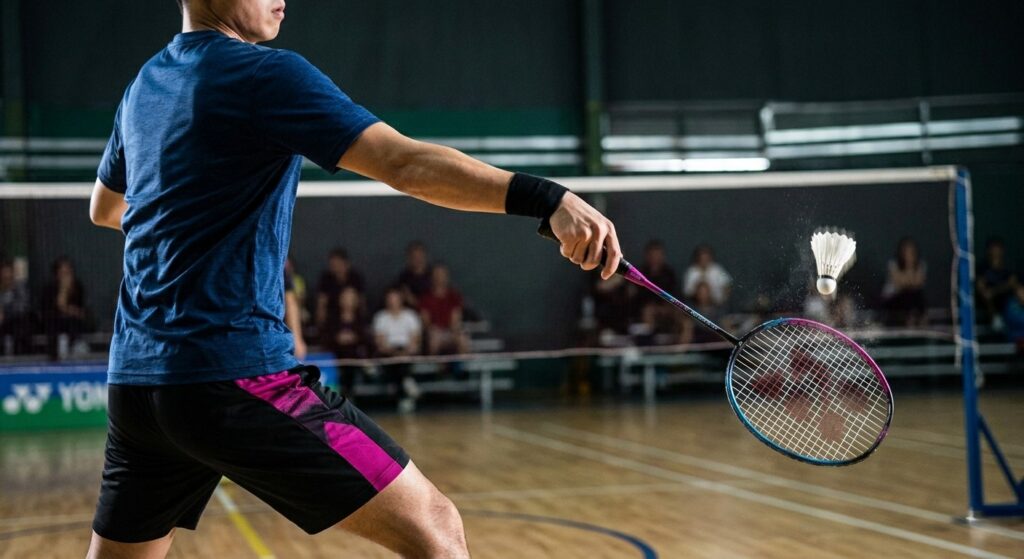
The YONEX Nanoray Light 18i is an ultra-fast, lightweight graphite badminton racket designed specifically for defensive specialists and players who favor lightning-quick net exchanges.
- Pros:
- Extremely light 5U weight frame reduces wrist strain instantly.
- Head-light balance delivers blazing fast defensive reaction times.
- High-grade carbon graphite frame safely supports high string tensions.
- Excellent for tight, deceptive net drops.
- Cons:
- Lacks raw, heavy clearing power from the rear boundary line.
- Requires fast arm speed to generate deep baseline-to-baseline clears.
Key Specs
- Weight: 5U (Average 77g)
- Flex: Medium
- Balance: Head-Light
- Material: High Modulus Full Graphite
- String Tension: Up to 30 lbs
- Skill Level: Beginner to Intermediate players
Real-World Performance
Pick up the Nanoray Light 18i and you will immediately notice how weightless it feels in your hand. In real-world defensive scenarios, this racket excels at blocking powerful smashes and redirecting them into open spaces. The head-light design lets you change your racket face angle mid-swing, which is perfect for cross-court net drops.
However, when you step to the backcourt to execute a heavy smash, the lack of head mass becomes apparent. Your smashes will rely on precise timing and quick wrist snaps rather than raw weight momentum.
Why We Recommend It
This is a phenomenal option for double players who spend most of their time defending smashes or dominating the front of the net. It proves that a high-quality badminton graphite racket doesn’t need to feel like a heavy club to be effective.
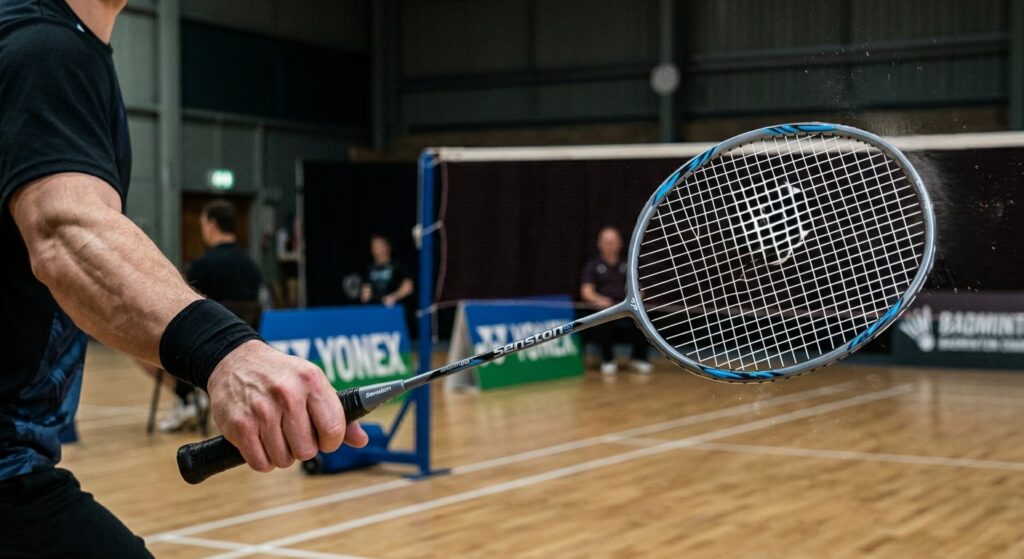
3. Senston N80
Short Verdict
The Senston N80 is the definitive choice for entry-level recreational players who want a durable, genuine carbon graphite badminton racket without breaking the bank.
- Pros:
- One-piece internal T-joint design prevents frame twisting.
- Remarkably affordable price point for an all-graphite construction.
- Comes pre-strung with decent tension and an included full cover.
- Highly durable frame handles occasional minor misuse well.
- Cons:
- At roughly 85 grams, it feels slightly heavy compared to modern 4U rackets.
- The shaft is quite flexible, which limits ultimate placement accuracy.
Key Specs
- Weight: 3U (Average 85g)
- Flex: Flexible
- Balance: Even Balance
- Material: 100% Carbon Graphite
- String Tension: 24–26 lbs (Factory Strung)
- Skill Level: Beginner
Real-World Performance
The Senston N80 offers a highly predictable, balanced feel on court. Because it features an even balance configuration, it doesn’t favor attack over defense, making it a safe tool for beginners learning basic grip forms and stroke techniques.
The frame absorbs hitting shock much better than an aluminium vs graphite badminton racket alternative. Its largest asset is forgiveness; the wide isometric head shape ensures that even off-center hits clear the net smoothly. The heavy-gauge factory stringing handles raw power well, though it lacks the crisp sound and feel of premium strings.
Why We Recommend It
For anyone looking for a graphite badminton racket for beginners that outperforms cheap sports-store rackets without costing a fortune, the Senston N80 is a highly reliable option.
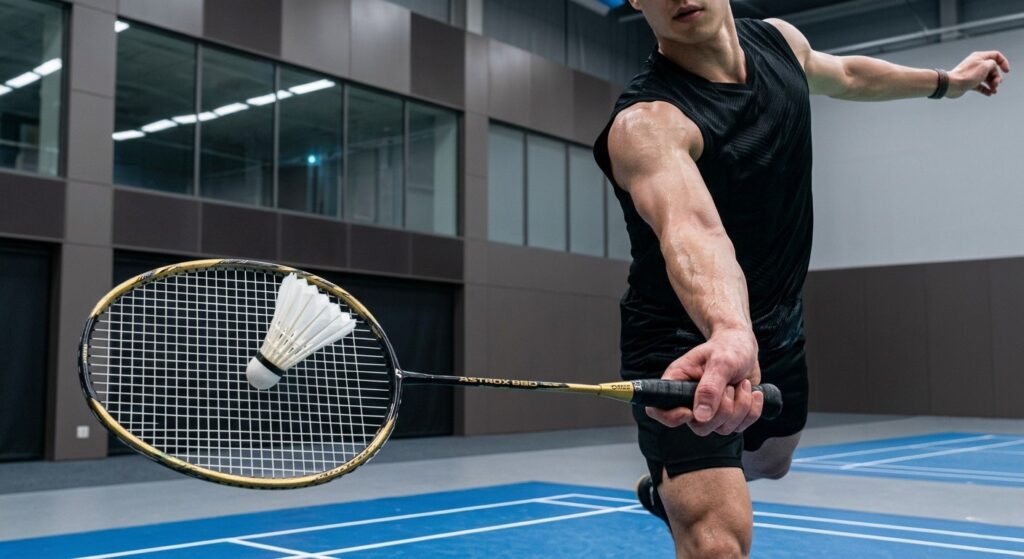
4. YONEX Astrox 88D Game
Short Verdict
Built for serious intermediate players, the YONEX Astrox 88D Game is designed to maximize backcourt attack power and slice through defensive blocks with sheer force.
- Pros:
- Equipped with the Rotational Generator System for smooth weight transitions.
- Concentrated power distribution makes backcourt smashes incredibly heavy.
- High-stiffness graphite frame offers sharp tactile feedback.
- Excellent structural strength for custom high-tension stringing.
- Cons:
- Demands proper wrist technique to unlock its true power.
- Can feel fatiguing during prolonged, fast defensive rallies.
Key Specs
- Weight: 4U (Average 83g)
- Flex: Medium-Stiff
- Balance: Head-Heavy
- Material: High Modulus Graphite + Nanomesh Neo
- String Tension: Up to 28 lbs
- Skill Level: Intermediate to Advanced
Real-World Performance
The Astrox 88D Game uses Yonex’s unique counterbalanced weight theory, placing mass at the top of the frame, the joint, and the end of the handle. On court, this means the racket feels stable when stationary, but delivers massive momentum during a full smash swing.
The medium-stiff shaft provides direct control over the shuttle’s flight path, making down-the-line slices incredibly precise. In rapid-fire doubles driving exchanges, it requires a stronger wrist to bring the head back quickly, making it less suited for defensive-minded players.
Why We Recommend It
This is a high-performance choice for upgrading intermediate players who want a dedicated rear-court attacking weapon. It offers premium technology at a practical price point.
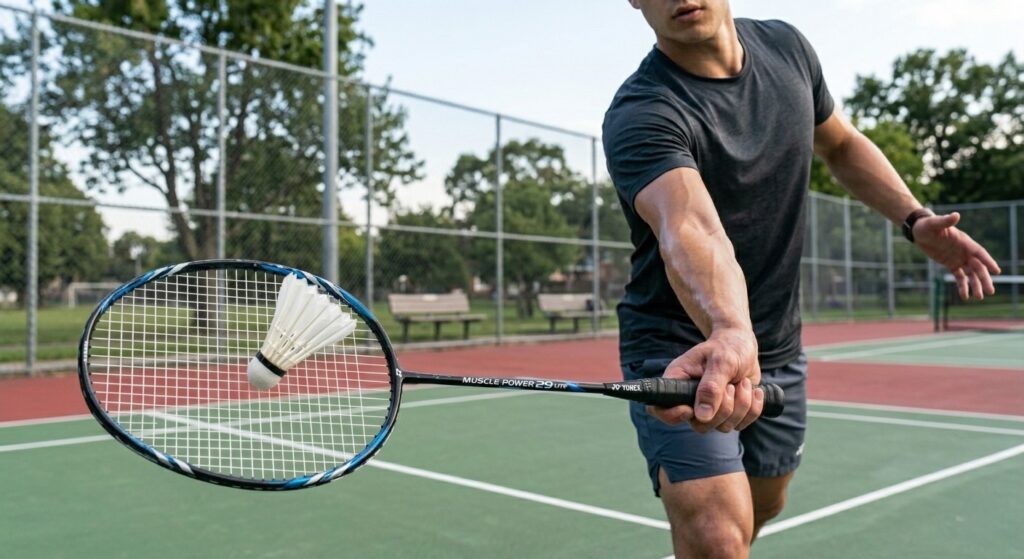
5. YONEX Muscle Power 29 Lite
Short Verdict
The YONEX Muscle Power 29 Lite relies on classic frame engineering to deliver a highly reliable, durable, and affordable full-graphite entry point for recreational club players.
- Pros:
- Muscle Power frame seating layout reduces string friction and stress.
- Highly durable full-graphite architecture stands up to regular use.
- Even-balance design adapts smoothly to any style of play.
- Very forgiving sweet spot for developing players.
- Cons:
- The classic frame shape feels thicker and less aerodynamic than modern styles.
- The stock factory grip wears out quickly and requires an overgrip.
Key Specs
- Weight: 3U (Average 85g)
- Flex: Medium
- Balance: Even Balance
- Material: 100% Carbon Graphite
- String Tension: 24–28 lbs
- Skill Level: Beginner to Early Intermediate
Real-World Performance
On the court, the Muscle Power 29 Lite stands out for its smooth, solid feel. The specific muscle-power grommet channel rounds the corners where the string rests, creating better energy transfer on contact.
Clearing from baseline to baseline feels smooth and reliable, thanks to the medium-flex shaft that helps generate depth with less effort. It moves through the air with a slightly heavier presence than the Nanoray series, but this extra mass provides stability when blocking hard shots at the net.
Why We Recommend It
This racket is a time-tested classic. It is a highly reliable choice for players who want a durable, affordable graphite badminton racket backed by Yonex’s industry-leading engineering.
Is a Graphite Badminton Racket Good?
Yes, it is the gold standard for modern badminton. Whether you play recreationally or competitively, graphite offers clear performance advantages:
- Weight Savings: Allows frames to weigh under 85 grams, reducing shoulder and wrist fatigue.
- Vibration Control: Absorbs impact energy cleanly, protecting your joints from repetitive stress.
- Energy Return: The shaft flexes and snaps back quickly, transferring more power directly to the shuttlecock.
- High Tension Strength: Can handle string tensions over 30 lbs without structural warping or cracking.
Graphite vs Aluminium Badminton Racket
To understand why upgrading matters, look at how a high-quality badminton graphite racket compares directly to an old-school aluminium vs graphite badminton racket alternative:
| Feature | Graphite Racket | Aluminium Racket |
| Average Weight | 70g – 88g (Incredibly Light) | 95g – 110g+ (Heavy & Fatigue-Inducing) |
| Frame Torsional Twist | Near Zero (Stays perfectly straight) | High (Twists easily on off-center hits) |
| Power Output | High (Snapback whip effect) | Low (Frame absorbs and wastes energy) |
| Max String Tension | 24 lbs to 32 lbs+ | 18 lbs to 22 lbs max |
| Joint Design | Seamless 1-Piece Molded Construction | 2-Piece External T-Joint Connection |
| Beginner Suitability | Excellent (Encourages correct stroke form) | Good for rough backyard use only |
| Advanced Suitability | Mandatory (Essential for competitive play) | Unusable for advanced techniques |
When should you choose graphite?
Choose graphite if you play regularly on indoor courts, want to develop proper technique, aim to maximize your power, or want to avoid wrist and shoulder injuries.
When should you choose aluminium?
Choose aluminum only for casual backyard recreational play, school gym classes where rackets are regularly dropped on concrete, or if budget is your absolute primary concern.
Graphite vs Carbon Fiber Badminton Racket
Many players ask: Is graphite the same as carbon fiber in badminton rackets?
The short answer is yes, they are essentially the same material.
+-----------------------------------------------------------------+
| MATERIAL TERMINOLOGY CLARIFIED                                  |
|                                                                 |
| Carbon Fiber  --> The raw thread material woven into sheets.    |
| Graphite      --> The finished crystalline carbon structure.     |
|                                                                 |
| Result: Brands use both terms interchangeably for marketing.     |
+-----------------------------------------------------------------+
When comparing a badminton racket graphite vs carbon, any distinctions usually come down to marketing terminology rather than different materials. Manufacturers often use terms like “High Modulus Graphite,” “Carbon Nanotubes,” or “Military Grade Carbon Fiber” to describe their specific proprietary blends.
- Standard Graphite: Excellent flexibility, ideal for beginner and intermediate rackets.
- High Modulus Carbon/Graphite: Stiffer, denser, and more premium, allowing for higher string tensions and sharper control in advanced rackets.
How to Choose the Best Graphite Badminton Racket
1. Weight Classifications
Badminton racket weights are categorized using standard “U” ratings. A higher number indicates a lighter frame:
- 3U (85–89g): Offers a solid, heavy feel. Favored by singles players and hard hitters who want maximum power.
- 4U (80–84g): The ideal modern sweet spot. Provides an excellent balance of speed and power for both singles and doubles.
- 5U / 6U (<79g): Ultra-light options. Perfect for front-court doubles players, defensive specialists, and anyone looking to minimize wrist strain.
2. Balance Points
Where the weight is distributed drastically changes how a racket performs:
Head-Heavy (Power) <=======[Even Balance (All-Around)]=======> Head-Light (Speed)
- Head-Heavy: The weight is shifted toward the top of the frame. This increases swing momentum, helping you hit powerful smashes and deep baseline clears.
- Even Balance: Weight is distributed evenly throughout the frame. It offers a versatile, all-around feel that adapts easily to both offense and defense.
- Head-Light: The handle holds more relative weight than the frame. This dramatically lowers air resistance, allowing for lightning-fast defensive blocks and quick net reactions.
3. Shaft Stiffness (Flex)
The flexibility of the shaft determines how energy transfers from your arm to the shuttle:
- Flexible: The shaft bends easily, creating a whip-like effect that adds power for players with slower arm speeds. Highly forgiving for beginners.
- Medium: Balance of power and control. Adapts well to intermediate players refining their strokes.
- Stiff: Bends very little during a swing. Requires fast arm speed and precise timing, but offers unmatched control for advanced players.
Final Verdict
Choosing the right racket comes down to matching your playstyle and skill level with the right frame characteristics:
- Choose the YONEX Astrox 99 Play if… You want the best overall balance of price, performance, and heavy smash power. It is an exceptional choice for beginners and intermediates alike.
- Choose the Senston N80 if… You are on a strict budget but want a genuine, one-piece carbon graphite frame that easily outperforms cheap department store options.
- Choose the YONEX Nanoray Light 18i if… You want an ultra-lightweight, easy-to-swing frame that cuts down on wrist fatigue and delivers blistering defensive speed.
You can find more rackets in our Rackets and Paddle Sports Section.
Frequently Asked Questions
Graphite is significantly better in terms of weight, power, control, and joint safety. Aluminum rackets are heavier and prone to bending, making them suitable only for casual backyard play.
There is no functional difference. Both terms refer to carbon composite materials. Brands use the terms interchangeably to describe their carbon fiber frame technologies.
Yes, they are highly recommended. A lightweight graphite frame helps beginners learn proper stroke mechanics and wrist positioning without the strain caused by a heavy metal racket.
The YONEX Astrox 99 Play is our top overall recommendation. It combines a premium carbon design with an accessible medium flex and a head-heavy layout, offering fantastic performance at an affordable price.
The YONEX Astrox 88D Game and the VICTOR Brave Sword 12 are excellent intermediate options. Choose the Astrox if you favor heavy backcourt attacking, or the Brave Sword if you prefer fast, defensive doubles play.
A high-quality graphite racket can last for years if properly cared for. However, they can crack from hard impacts against walls, concrete, or other rackets during doubles play. They will also wear out over time if re-strung at tensions that exceed the manufacturer’s recommendations.
Professional players require maximum speed, control, and high string tensions. High-modulus graphite is the only material rigid and light enough to meet the demands of the modern, ultra-fast professional game.