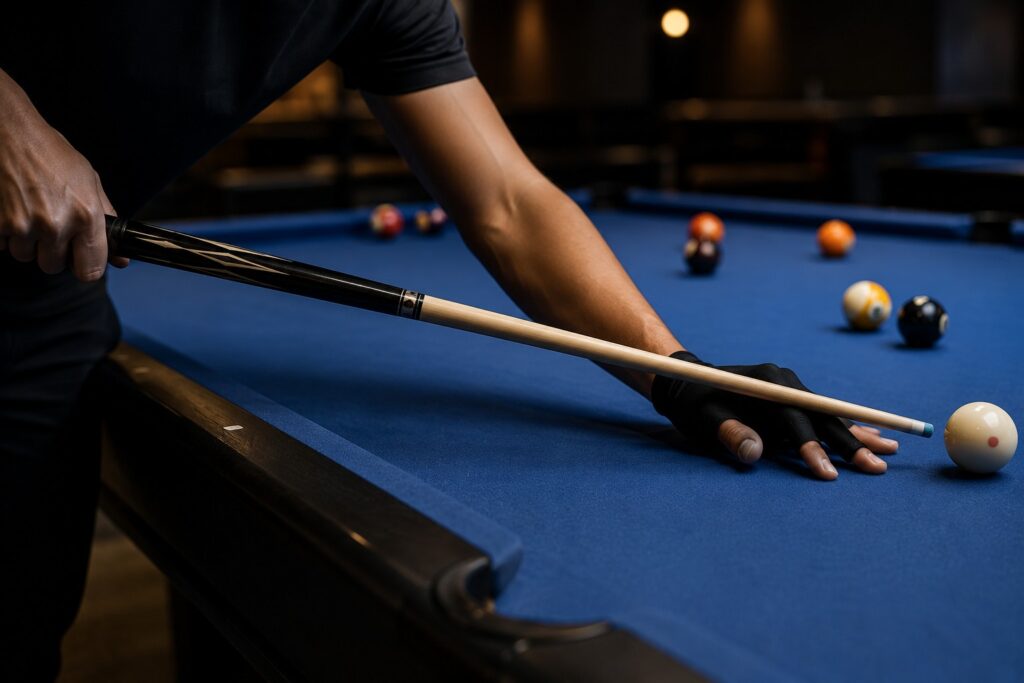
Stop settling for warped house cues that ruin your aim. Choosing the best billiard stick is the fastest way to stabilize your stroke, improve shot consistency, and finally stop compensating for gear that isn’t straight.
You can find more billiard gear in our indoor sports equipment section.
Our Top Picks at a Glance
- Best Overall: Predator sticks – The gold standard for low-deflection tech and modern feel.
- Best for Beginners: Valhalla Series 100 by Viking – Unbeatable value with a lifetime warranty against warpage.
- Best Performance Upgrade: Lucasi Custom Sneaky Pete – Professional-grade low-deflection shaft at a mid-range price.
- Best Budget Option: Players 4-Point Wrapless – A solid, no-frills two-piece maple cue that outperforms its price tag.
Billiard Stick Comparison Tables
The right stick depends on your current game and how often you play. These tables help you skip the fluff and find the exact gear that fits your needs.
A. By Skill Level
If you are still using house cues, a Beginner stick will change your game. If you are playing league, move to Intermediate or Advanced for better spin control.
| Level | Gear Type | Why It Stands Out | Best Use Case | See on Amazon |
| Beginner | Valhalla Series 100 | North American Maple + Lifetime Warranty | First personal cue | See Price |
| Intermediate | Lucasi Custom | Zero Flexpoint low-deflection shaft | League & Tournament play | See Price |
| Advanced | Predator P3 | 30-piece construction for total consistency | Professional competition | See Price |
B. Best Brands Comparison
These three brands dominate the market because they offer distinct advantages in technology versus traditional craftsmanship.
| Brand | Gear Type | Strength | Weakness | Our Pick | See on Amazon |
| Predator | Carbon/Hybrid | Industry-leading low deflection | Premium pricing | ⭐ The Best | See Price |
| McDermott | Hardwood Maple | Iconic feel and custom aesthetics | Traditional shafts have more “squirt” | Reliable Pro | See Price |
| Viking | Performance Maple | Durable high-impact resin ferrules | Limited high-end carbon options | Best Value | See Price |
Pros and Cons of Each Category
Understanding the trade-offs between a budget stick and a professional performance tool is key to making a smart investment.
| Category | Pros | Cons |
| Entry-Level (Under $150) | * Extremely affordable * Durable builds * Better than any house cue | * Basic tips require frequent shaping * High deflection (ball “squirts” more) |
| Performance (Over $350) | * Low-deflection shafts improve accuracy * Premium leather tips * Adjustable weight systems | * Higher upfront cost * Carbon fiber has a “stiffer” feel |
Key Features Breakdown
When buying, focus on these five factors to ensure you aren’t just paying for pretty inlays.
- Shaft Material: Hard Rock Maple is the standard for feel. Carbon Fiber is the 2026 standard for durability and zero-warp performance.
- The Tip: Look for layered leather (like Tiger or Kamui). Softer tips grip the ball better for spin; harder tips last longer.
- The Joint: A stainless steel joint or a “Quick Release” (Uni-Loc) ensures a solid hit and fast assembly.
- Weight: Most players prefer 19oz. Ensure the cue has an adjustable weight bolt system so you can fine-tune it later.
- Low Deflection: This is the most important feature for accuracy. It reduces how much the cue ball deviates from your line when you use “English” (side spin).
Real Performance: How They Play
Based on our thorough research and users’ feedback, a stick like the Predator P3 provides a noticeably “dead” and stable hit. This isn’t a bad thing, it means the cue isn’t vibrating in your hand, allowing for more predictable energy transfer.
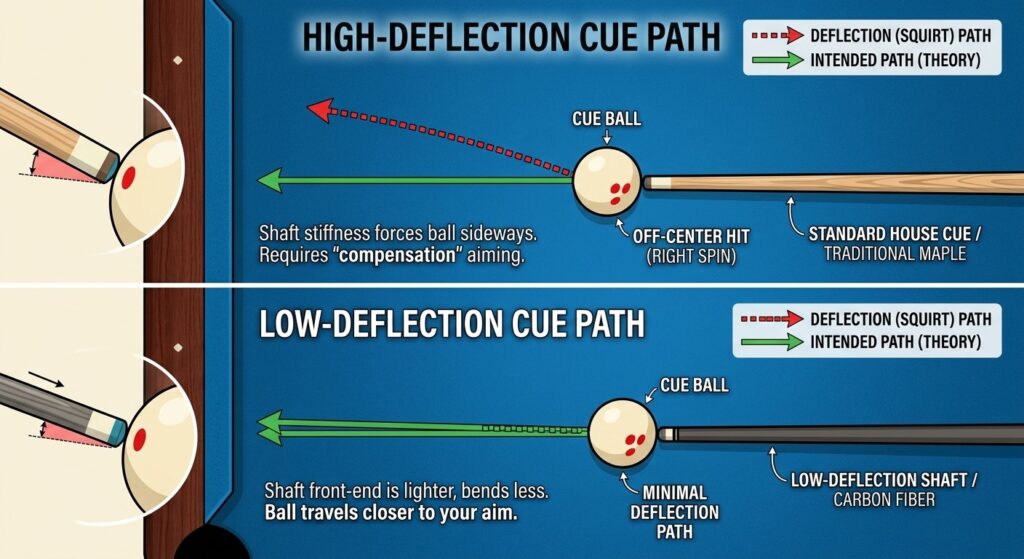
Compared with similar products in the budget range, the Valhalla and Players cues feel more “lively” and traditional. They are excellent for learning the fundamentals, but you will find they struggle when you start applying heavy side spin, as the cue ball will “squirt” away from your target line more than it would with a carbon fiber shaft.
Comparison Summary
- Choose Predator if you are a serious league player who wants the absolute best technology to minimize aiming errors.
- Choose Valhalla or Players if you want a reliable first cue that won’t warp and provides a consistent hit for under $150.
- Avoid “No-name” cues from big-box retailers. They often use cheap wood that warps within months and non-standard tips that are impossible to replace.
Final Take
If you play more than once a week, buy the Lucasi Custom. It’s the perfect middle ground, giving you a professional low-deflection shaft without the $800 price tag. Skip the professional carbon fiber sticks if you are just playing casually at bars; a solid Viking will serve you better for years.
Frequently Asked Questions
Choosing the right stick involves understanding your own level of commitment and playing style. Here is everything you need to know before hitting “buy.”
The Predator P3 or any cue equipped with a Revo Carbon Fiber shaft is currently the most accurate due to its low-deflection technology.
Yes, if you play competitively. High-end cues use superior materials that don’t warp and shafts that make aiming with spin significantly easier.
Check for a straight grain in the maple, a high-quality layered leather tip, and a reputable joint system like Uni-Loc or 5/16×18.
Beginner cues focus on durability and price. Advanced cues focus on “low deflection,” which reduces the horizontal displacement of the cue ball when hit off-center.